Bird observatory in Israel: Agamon Hahula, Agamon Hefer, Viker observatory & Rosh Hatzipor


bird watching in israel connects you to millions of migrating birds every year. This guide explores leading israel bird observatory sites, highlighting the best places to enjoy Israel bird life up close, from wetlands to open reservoirs.
written by Zvika Gasner Koheleth 12-December-2024 (Originally 10-November-2019, edited 02-November-2020, 29-March-2021) photography by Angela Hechtfisch
Agamon Hahula Israel Bird Observatory – A Living Story
Agamon Hahula is Israel’s number one bird-watching hotspot and a global magnet for nature lovers.
It sits in northern Israel, about 45 minutes north of Tiberias and just 15 minutes from Kiryat Shmona, right near the Lebanese border and the Golan Heights. On clear winter days, Mount Hermon shows off its snowy peak in the background.
The story of Agamon Hahula begins in the early 1930s, when the land was purchased, and later, in the early 1950s, became Israel’s first and largest Zionist agricultural project. Back then, the Hula Valley was mostly swamp and shallow ponds. The land wasn’t usable, mosquitoes were everywhere, and malaria was a real danger for local communities. The big dream was to drain the swamp, eliminate disease, and turn the area into productive farmland.
Reality, however, had other plans. The soil, known locally as “kabul” turf, dried out, proved unsuitable for farming, and caught fire easily. The ground itself was unstable and kept sinking, making construction nearly impossible. Even worse, the Jordan River, which draws part of its water from the Hula area, began carrying polluted, unfiltered water downstream. This directly affected the Sea of Galilee (the Kinneret), Israel’s most important freshwater reservoir at the time.
By the early 1990s, it was clear something had to change. A bold decision was made to re-flood part of the valley and restore nature. The Agamon was created — a “small lake” in Hebrew, much smaller than the original swamp, but enough to bring life back. Water returned, plants spread, and wildlife followed.
Today, Agamon Hahula Israel bird observatory is a thriving ecosystem and one of the most important bird migration stops in the world. Every year, hundreds of thousands of birds pass through, turning a past environmental mistake into one of Israel’s greatest ecological success stories.


Agamon Hahula Today – Where the Sky Comes Alive
Twice a year, in spring and autumn, millions of birds travel between Europe and Africa, and Agamon Hahula sits right in the middle of their highway. Most of these birds come from Eastern Europe — places like Russia and Poland — and after crossing the African–Syrian Rift, they find Agamon Hahula Israel bird observatory to be the perfect place to rest, refuel, and regroup.
Bird migration depends on thermal air currents, which exist only above land. Israel happens to be the only land bridge between Europe and Africa, making Agamon Hahula one of the most important migration stopovers on the planet. During peak migration season, an estimated 500 million birds pass through the area. Some stay for the entire winter, but most continue south to Africa via Egypt. Cranes are the real stars here, and up-to-date crane migration maps can be followed through NABU (Nature and Biodiversity Conservation Union).
In the past, large flocks caused serious damage to nearby crops, creating constant tension with local farmers. Today, that problem has turned into a win-win solution. Farmers now feed the birds with corn and chickpeas — their favorite snacks — keeping them away from fields and happy in the wetlands. To support this project, every entrance ticket includes a small “crane tax” of 5 ILS, directly funding bird feeding. Farmers are happy, birds are happy, everyone wins.
Visiting Agamon Hahula is an experience you can shape your own way. The park is a circular 8.5 km route and can be explored on foot, by bicycle, or by golf cart. Carts and bikes come with an extra fee and a 75-minute time limit, depending on group size. Walking is highly recommended — it’s calm, immersive, and a great way to truly connect with nature. Just keep in mind that on hot summer days, completing the full circular route on foot isn’t realistic. So bring a little patience — birdwatching always rewards those who slow down.
One of the most popular experiences is the safari wagon tour. These tractor-pulled wagons are surprisingly loved by the birds. The sound of the tractor signals “freshly turned ground,” which means worms and insects might be available. As a result, birds don’t fly away, allowing incredibly close, almost zero-distance encounters.
Several safari tour options are available throughout the day, but the standout is the photographer’s tour. It lasts about two hours and runs during the early morning “early bird” hours, when activity is at its peak. Photographer tours cost around 130 ILS per person. Regular one-hour safari tours cost between 60–80 ILS, depending on timing. Entry fees are separate and cost 35 ILS for adults and 21 ILS for visitors under 18.
The best months for migration are November and December. In any season, the best time of day is early morning — ideally before 9:00 AM — when bird activity in the air is at its most dramatic.
A modern visitor center opened in November 2019, offering high-tech exhibits and multimedia experiences focused on bird migration and the history of Agamon Hahula. The center was closed during the COVID period between March 2020 and 2021, but happily reopened in 2022 and is now fully operational.
Agamon Hahula today is proof that nature, when given a second chance, knows exactly how to shine.




Agamon HaHula Bird Safari Tour – A Before-Sunrise Adventure
After giving the area a short two-week break to settle, we headed back to Agamon HaHula for the before-sunrise photographer safari. That meant a very early wake-up call — 2:00 a.m. sharp. We drove north on Highway 6 and arrived at 4:45 a.m., just 15 minutes before the tour kicked off. Another easy option is staying overnight in Tiberias and continuing north on Route 90 for about 40 minutes.
When we arrived, around 15 excited photographers were already waiting on the safari wagon, pulled by a working farm tractor. As a city guy from Ramat Gan, this was one of the strongest nature connections I’ve ever experienced — not just with wildlife, but specifically with birds. It was genuinely breathtaking.
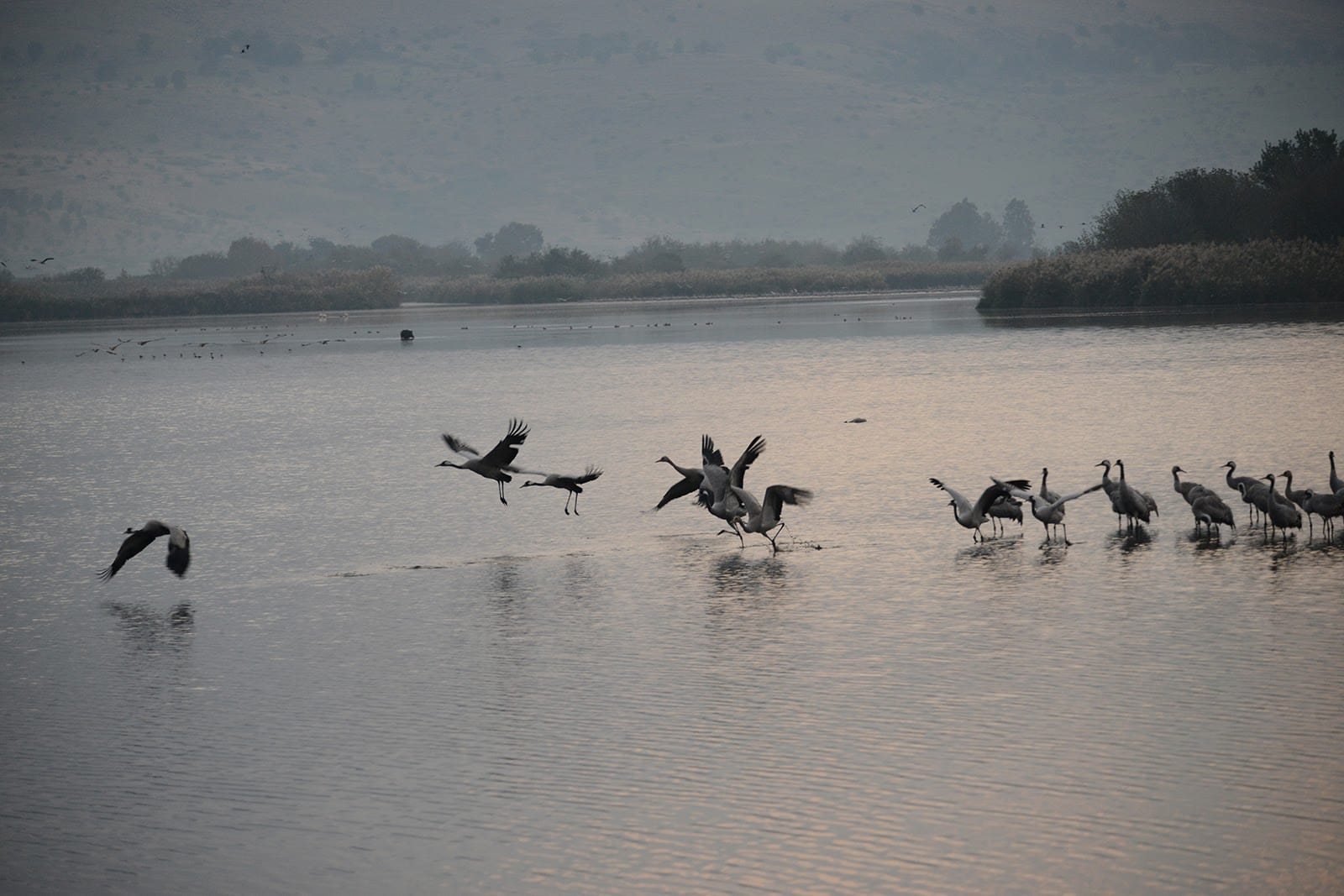
The migrating birds were unbelievably close — literally an arm’s length away. At times, thousands of them took off together, flying right above our heads, filling the sky with movement and powerful calls. Even though the air was cold, the excitement completely erased the chill. Only around sunrise, at 6:10 a.m., did the temperature begin to rise.
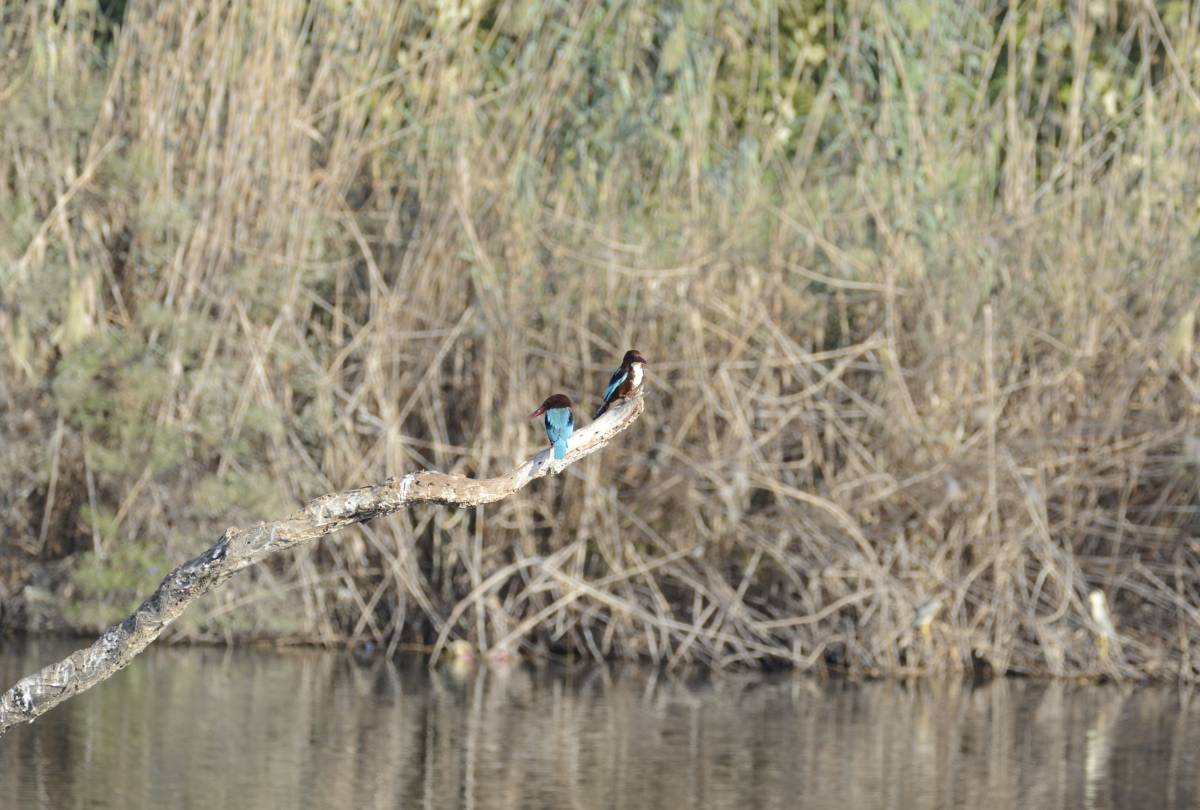
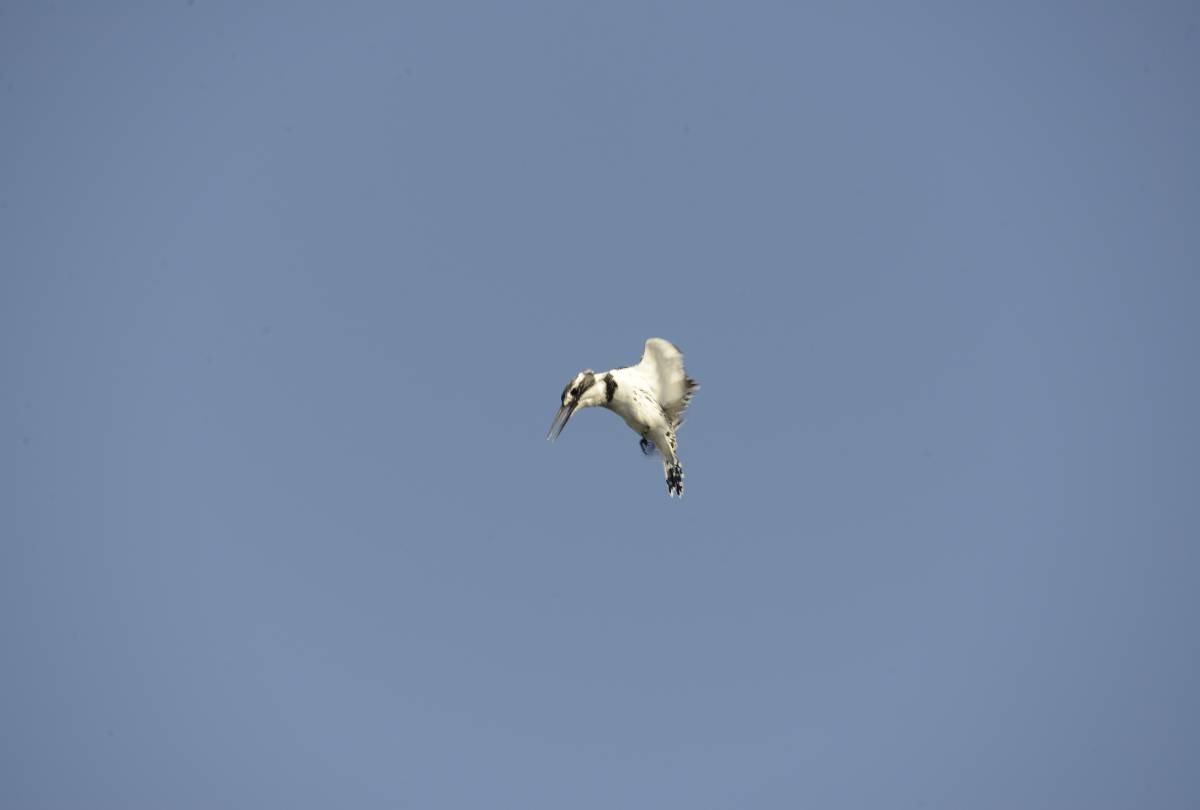
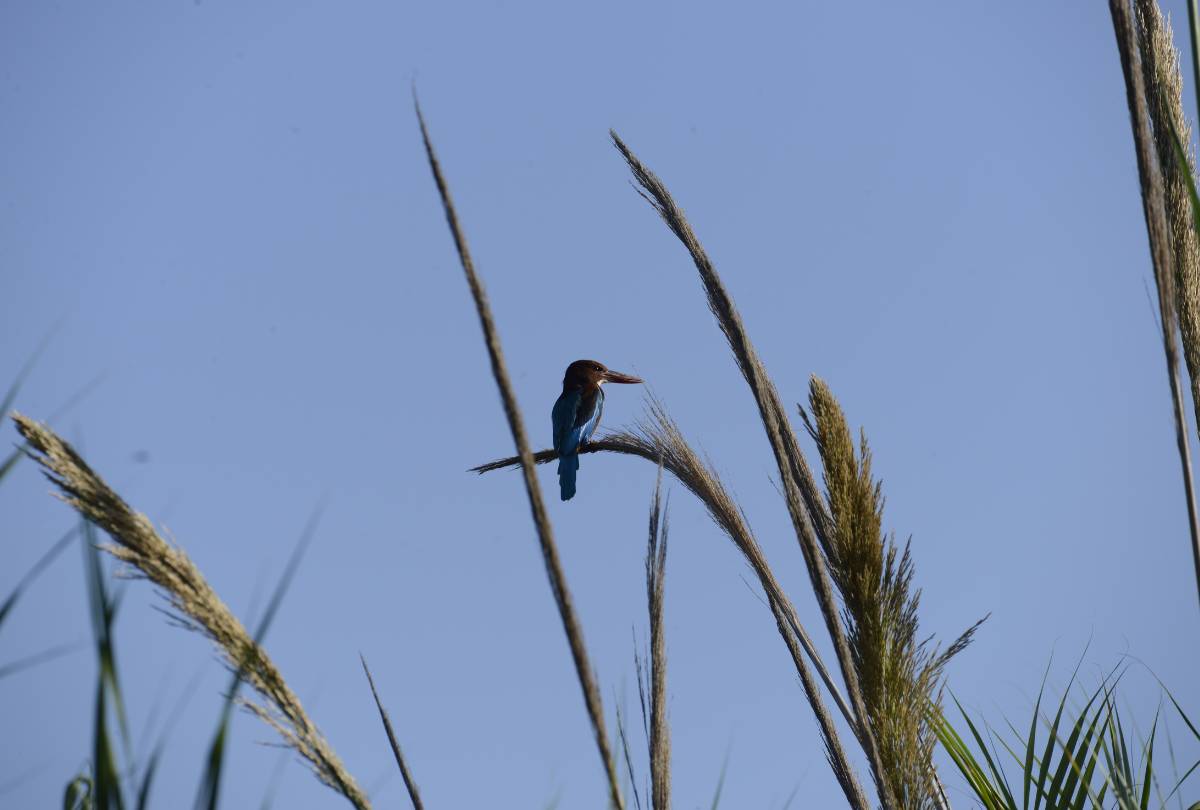
All around us were birds in massive, noisy groups: kingfishers, ibises, house sparrows, spur-winged lapwings (Hoplopterus spinosum), and pelicans, all calling, singing, and declaring their presence in the most spectacular way.
But the undisputed stars of Agamon HaHula are the cranes. These majestic birds arrive in enormous numbers all the way from Eastern Europe, and seeing them together is nothing short of awe-inspiring. For about 20 years, the cranes were manually fed by KKL together with the local farmers’ association, funded by a small 5-shekel levy collected from visitors.


Since 2019, however, the cranes have not been fed due to disagreements between the organizations involved. As a result, the birds began searching for food in nearby agricultural fields, and farmers responded by trying to scare them away using loud noise cannons and sirens.
During the winter of 2021/22, an avian flu outbreak hit hard, and around 8,000 cranes died in the Hula Valley. In late January 2024, about two weeks after the crane feeding station reopened, signs of crane deaths appeared again. Tests confirmed the aggressive H5N1 virus. Because crowded feeding areas help the disease spread quickly, the feeding was stopped.
It’s hard not to feel frustrated by this situation. The birds are the heart of Agamon HaHula, and their well-being comes before everything else.
HaHula Bird Safari Tour – Quick & Useful Info
The bird safari wagon tour costs 130 ILS per person and is absolutely worth it. The best time to visit is from mid-November through the end of December, when migration peaks. And one important tip: dress warm — those early hours are cold.


Vicker Bird Observatory – A Hidden Gem in the Sharon Region
Vicker Bird Observatory is a spacious, shaded viewing terrace overlooking the Hasharon Water Reservoir in the Emek Hefer region. It’s perfectly located — just 20 km south of Caesarea and 35 km north of Tel Aviv.
The reservoir itself holds around one million cubic meters of water. It collects floodwater from the Alexander River and serves both as a storage basin and a supply source for nearby reservoirs. Beyond its practical role, the area is surprisingly beautiful, with green lawns, flowers, and plenty of butterflies and insects — exactly the kind of environment birds love.
The observatory offers two main viewing points, about 200 meters apart. The primary terrace is on the western side and provides the best panoramic views over the water. Access is easy by car using the Waze app, but the more rewarding option is a 2.5 km walk through open nature, which adds adventure and atmosphere to the visit.
When we arrived in early November, the scene was incredible. Over 500 pelicans were floating and feeding in the reservoir, while thousands of great cormorants lined the northern bank. Watching such massive flocks up close, with complete quiet around, turns a simple lookout into a powerful nature experience.
Vicker Bird Observatory is calm, accessible, and full of life — a perfect stop for bird lovers, photographers, and anyone looking for a peaceful break in nature.

Agamon Hefer Bird Observatory – The New Natural Extension
The Vicker Bird Observatory now has a “younger brother” — Agamon Hefer. This natural Israel bird observatory park is located just 5 km away and offers a more immersive, nature-based experience. Instead of a single viewing terrace, Agamon Hefer spreads out across open wetlands, giving birds plenty of space and visitors a front-row seat to real wildlife action.
Since most birds are busiest fishing and feeding while the air is still cool, early visits make all the difference. Arriving before 10:00 a.m. is highly recommended if you want to see the park at its most active, with birds flying low, feeding, and gathering in large numbers.
Together, these two free-entry spots — Vicker and Agamon Hefer — create the perfect bird watching in israel combo: close to each other, easy to reach, and best enjoyed early in the day.


Rosh Hatzipor Bird Observatory – Nature in the Heart of Tel Aviv
The Rosh Hatzipor (which literally means “Bird’s Head” in Hebrew) Bird Observatory is a small but impressive nature spot tucked inside Yehoshua Park, better known as Hayarkon Park, right in the heart of Tel Aviv. It sits exactly where the Ayalon and Yarkon streams meet, covering about 32 dunams of trees and green space — a true urban escape surrounded by city life.
The observatory is cleverly designed so visitors can watch birds without disturbing them. Observation cabins and hideouts are built throughout the site, connected by three walking paths that lead to a large, fully accessible wooden observation deck at water level. Each pavilion can host up to 50 people and includes viewing windows adjusted for both children and adults, making it a great spot for families and school groups.
Compared to other Israel bird observatories around Israel, Rosh Hatzipor is the smallest — but it easily wins when it comes to organization, maintenance, and accessibility. No matter where you are in Tel Aviv, you’re never far from this peaceful corner of nature.
The park itself is an artificial wetland spread over about 15 dunams of water. It features a lake with a small central island, narrow water channels, moist meadow areas, and a section that simulates a natural swamp. This smart mix of habitats creates ideal conditions for a wide range of bird species throughout the year.
Yehoshua Park also hosts outdoor activities year-round, including guided tours, nature workshops, and special bird-related events. Many of these take place in and around the observatory, and updated schedules can be found online through the park’s official channels.
Rosh Hatzipor proves that even in the middle of a busy city, nature and birds can thrive — and all you need to do is slow down and look around.
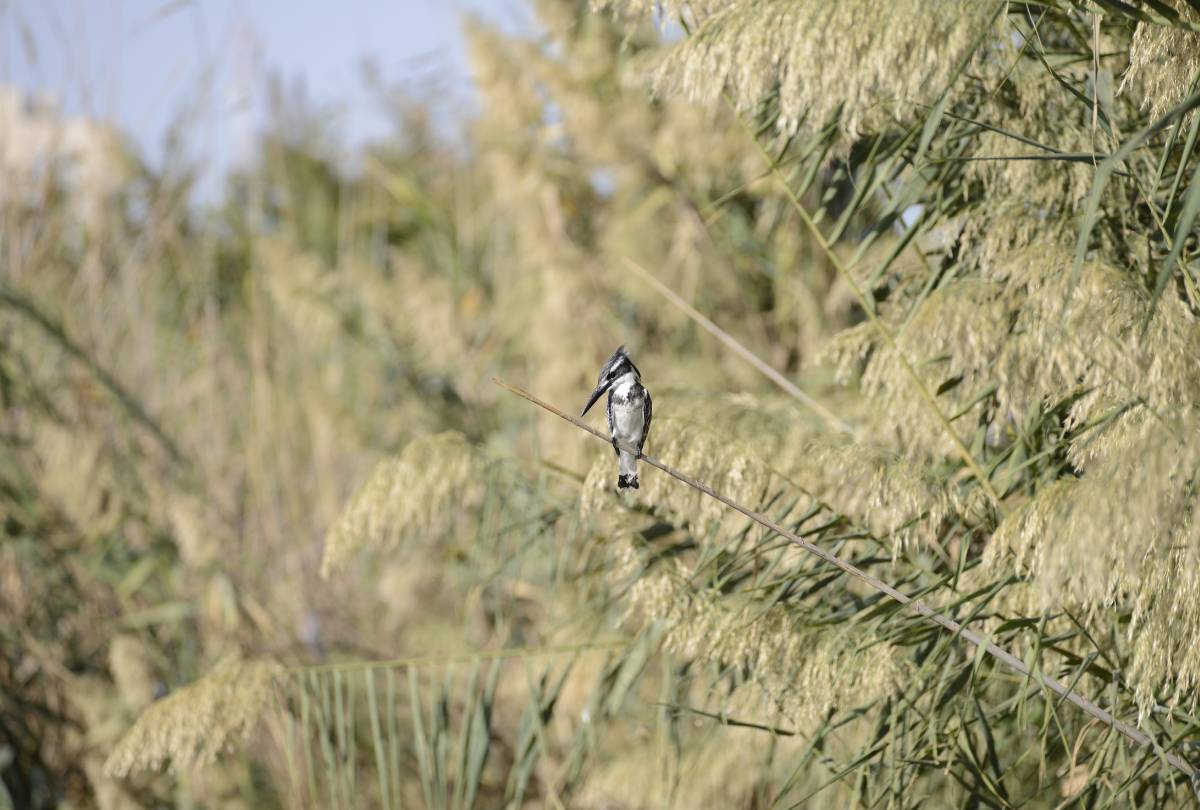
Hod HaSharon Park
Hod HaSharon Park, often nicknamed “the Garbage Mountain”, is a surprising green escape in the southern part of Hod HaSharon, just a 15-minute drive from Tel Aviv. What was once the city’s landfill has been completely transformed into a scenic park, with a restored hill now serving as a walking trail, lookout point, and bird watching in israel hub spot. From the top of the Hill, you get wide, open views across central Israel.
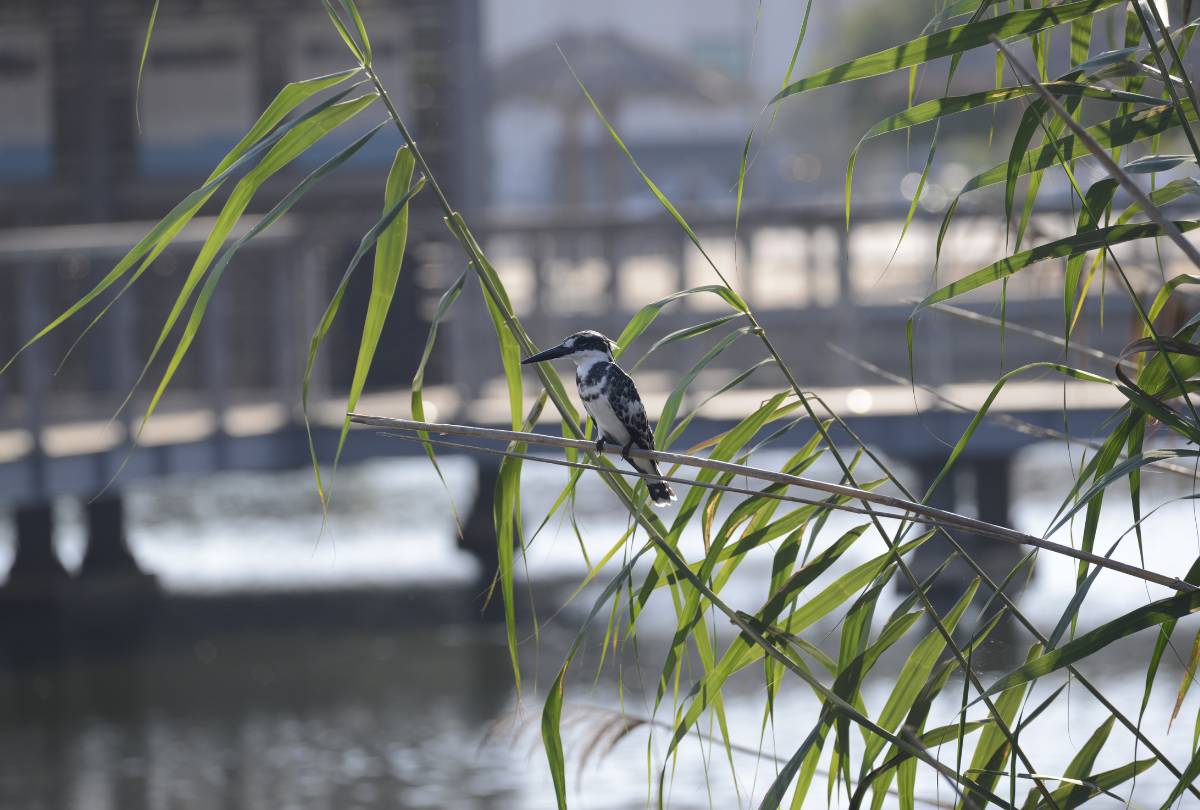
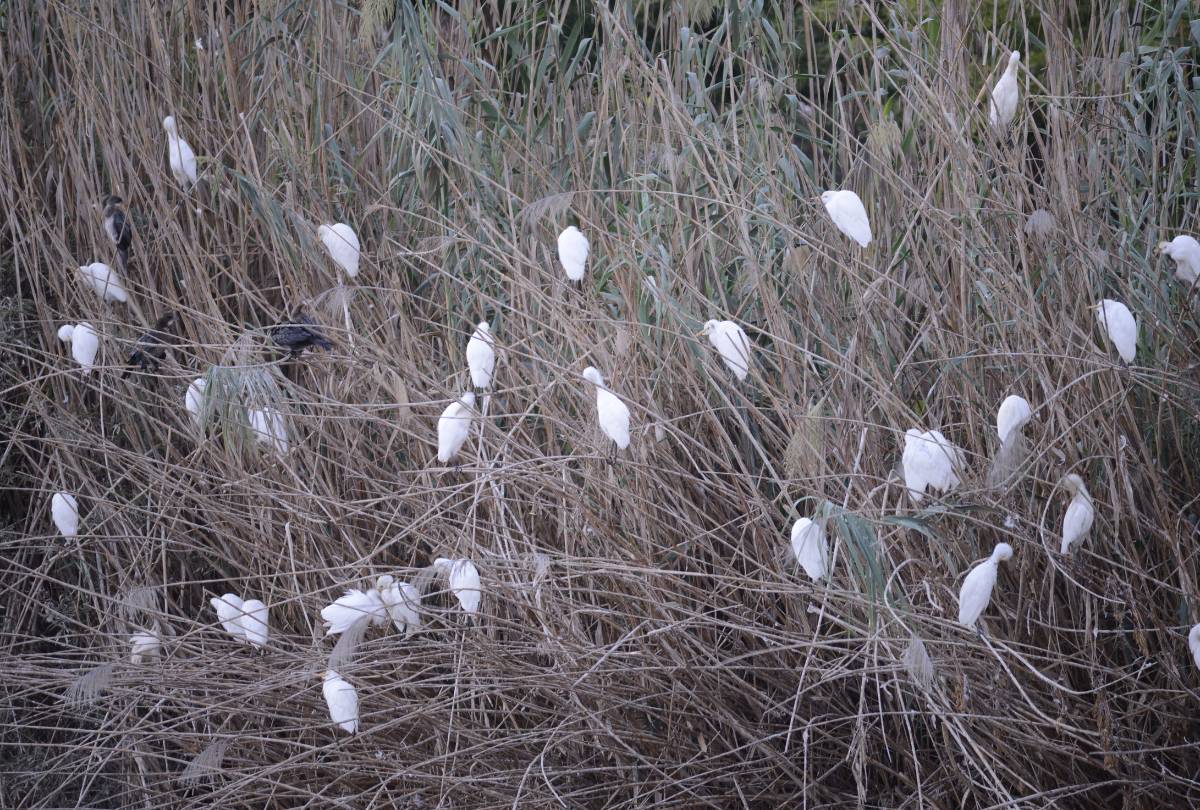
At the foot of the hill lies Israel’s largest ecological lake, covering 27 dunams. The lake is filled with treated reclaimed water from the Kfar Saba–Hod HaSharon wastewater treatment plant, turning smart recycling into a thriving nature spot. Around the lake and throughout the park, birdlife is everywhere — waterfowl, herons, geese, ducks, and songbirds can be seen either out in the open or from three hidden observation huts that are especially popular with local photographers.
Look a little closer and you might also spot softshell turtles and nutria swimming in the water. Hod HaSharon Park is a great example of how nature, sustainability, and urban life can come together in one unexpectedly beautiful place.