Bet She’an vibes: the ancient city, Gan Hashlosha and Beit Alfa
Bet She’an vibes hit differently: an ancient city layered with history, crystal-clear swims at Gan Hashlosha (Sachne), and jaw-dropping mosaics at Beit Alfa. One compact corner of Israel where archaeology, nature, and chill moments come together—easy, authentic, and seriously memorable.
Written by Zvika Gasner Koheleth, 28-January-2026. Photography by Angela Hechtfisch
Beit She’an – quick facts & good vibes
Beit She’an is a laid-back city in northern Israel, sitting in the Beit She’an Valley just east of the Jezreel Valley. You’ll find it along Highway 90, about 25 km south of the Sea of Galilee. The modern city is small, relaxed, and surrounded by wide-open landscapes, farmland, and warm weather year-round. It’s a place where ancient ruins meet everyday Israeli life — quiet, authentic, and packed with stories waiting to be discovered.
Bet She’an Timeline: From Ancient to Modern
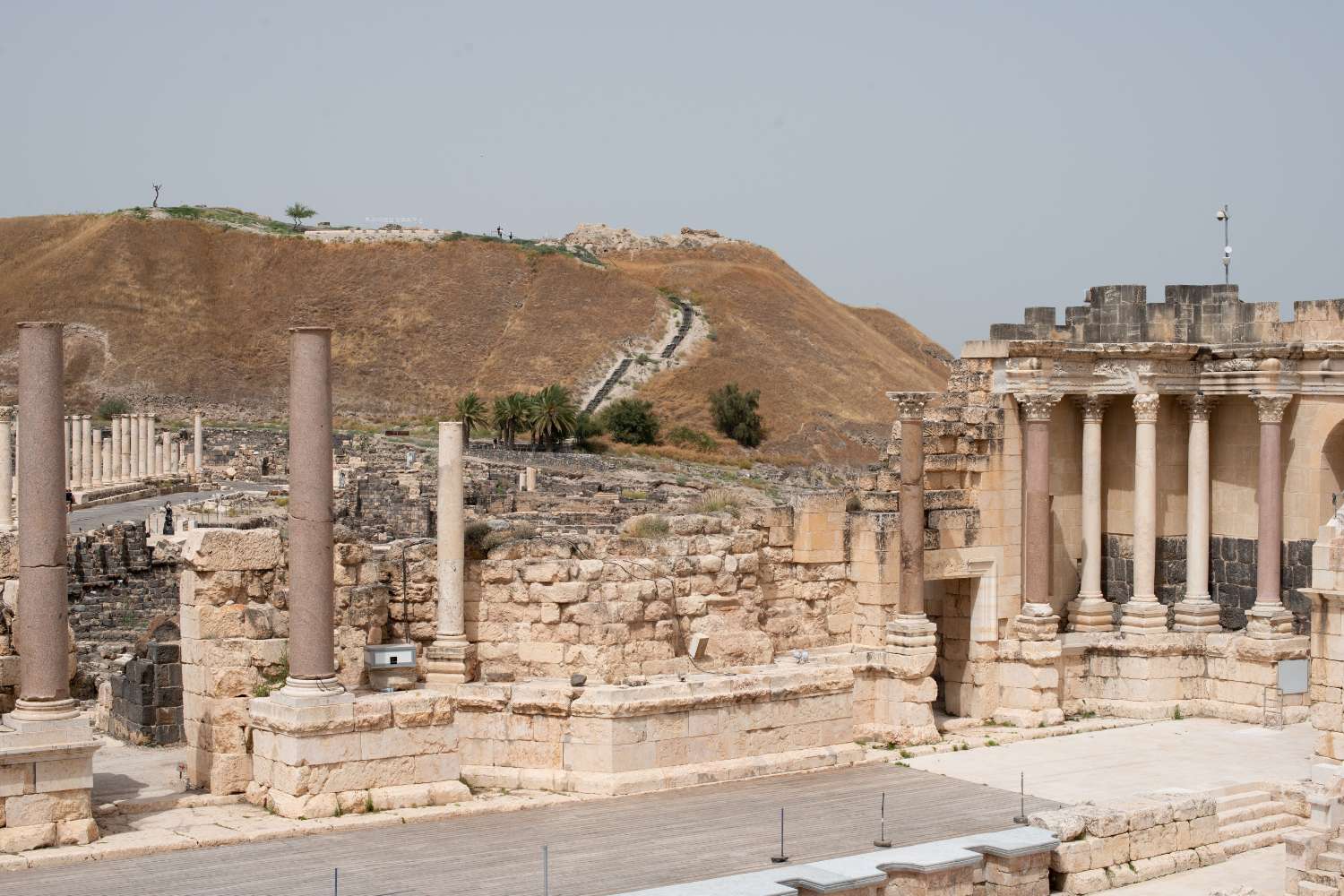
But don’t let the calm vibe fool you—Beit She’an is seriously ancient. Archaeology at Tel Beit She’an goes all the way back to the Chalcolithic period. At Tel Beit She’an, history literally piles up. Settlements were built and rebuilt on the same spot for millennia, creating a layered hill.
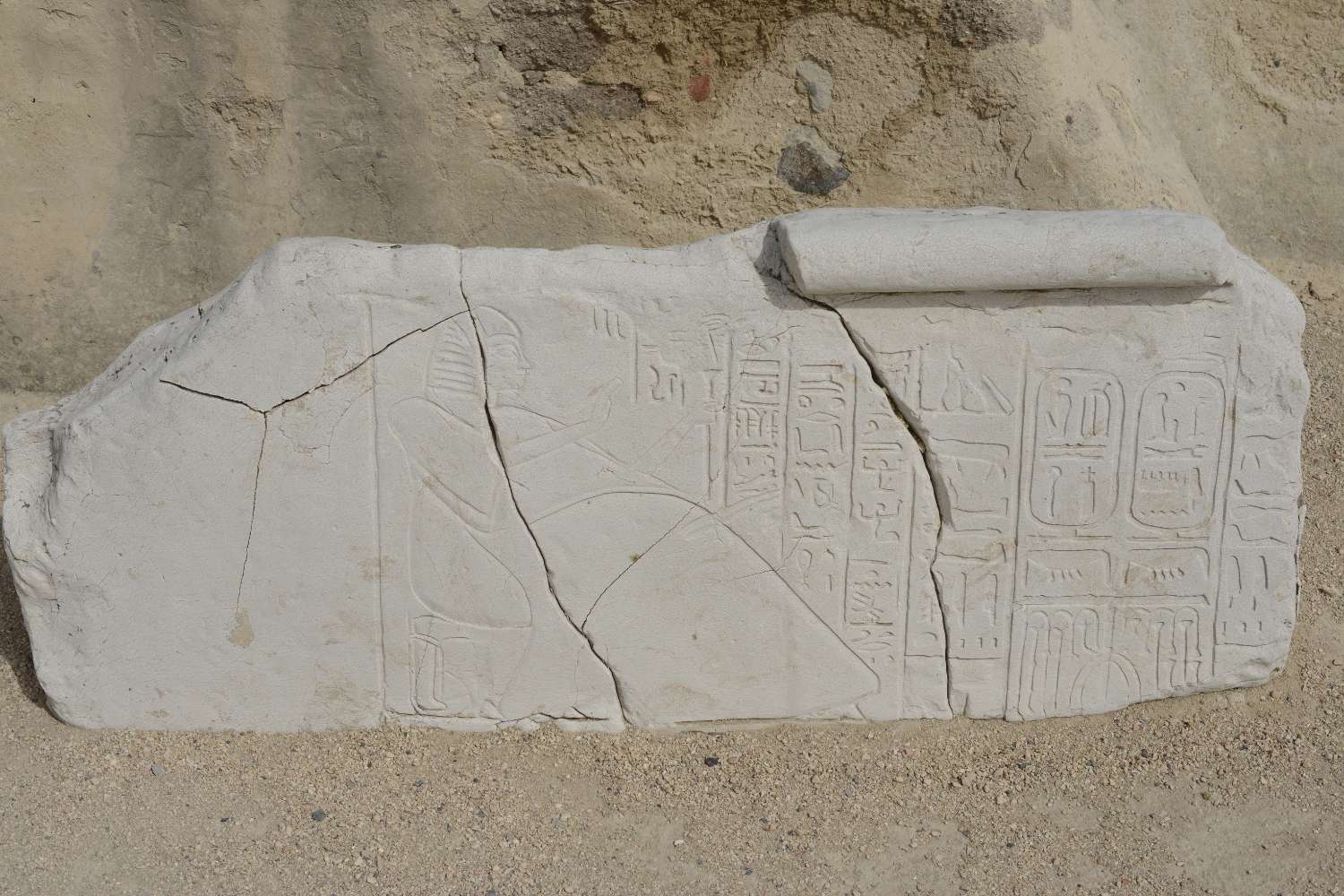
Back in the Late Bronze Age, when Canaan was under Egyptian rule, this city was already a big deal — a busy administrative hub where power, politics, and daily life crossed paths. Fast-forward a bit, and according to the Bible, it shows up again as a Canaanite city during the time of King Saul, before eventually becoming part of the Kingdom of Israel.
In other words, this place didn’t just witness history — it lived it. Empires came and went, borders shifted, rulers changed, but the city kept its pulse. Layers upon layers of stories piled up here: Egyptian officials, Canaanite kings, biblical drama, early Israelite life, early Roman and later Byzante time, Mamluc, and Turks Utooman, all sharing the same ground. Walk around today and you’re literally stepping on thousands of years of human ambition.
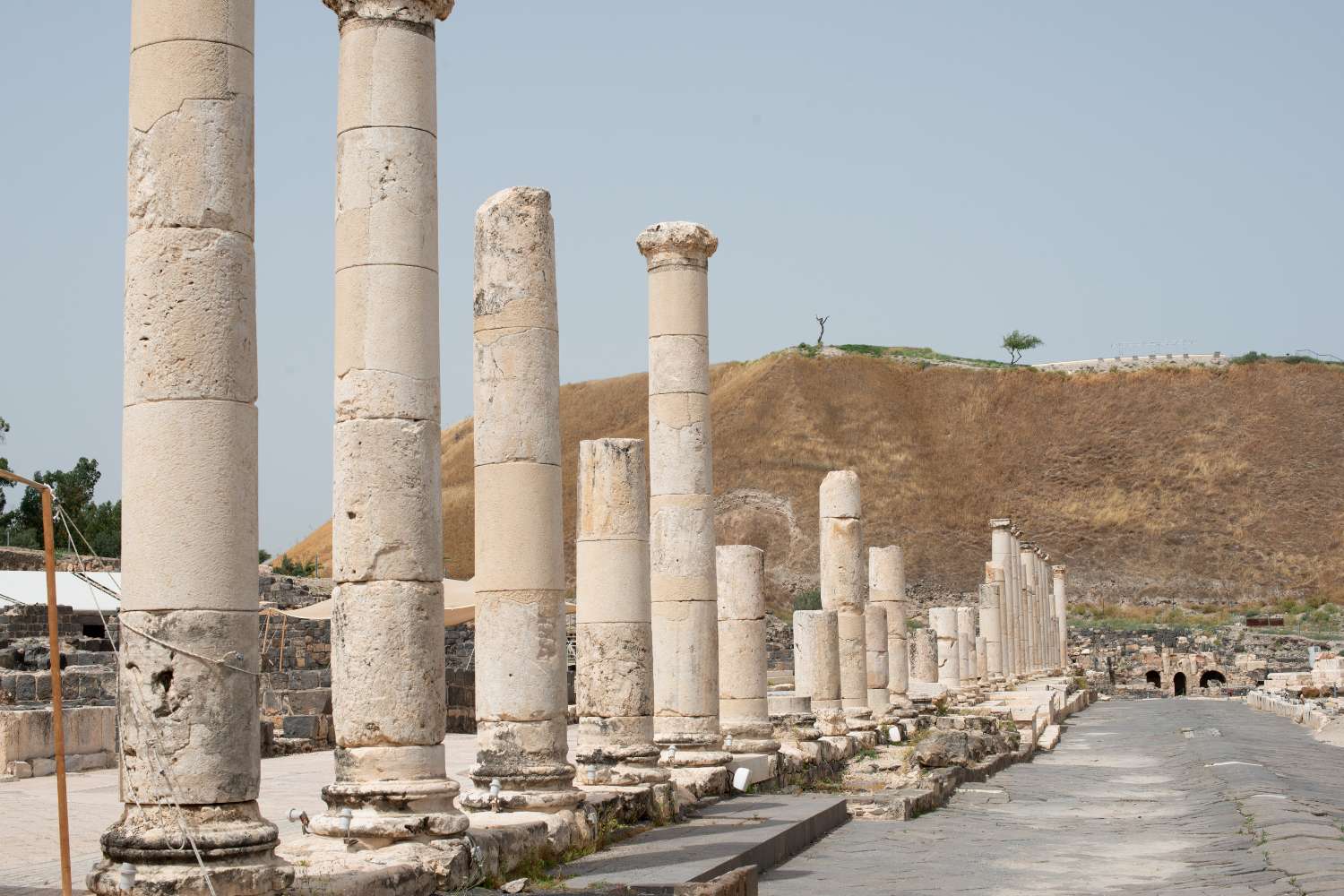
The Fall of King Saul and the Wall of Beit She’an
As the Philistines gathered near Mount Gilboa, gearing up for battle against Israel, King Saul felt the pressure. Desperate for guidance, he secretly went to a medium and asked her to summon the spirit of the prophet Samuel to ask what he should do.
The message was grim: Israel would lose the battle, and Saul and his sons would fall. Still, Saul didn’t back down. The next day, he went out to fight.
During the battle on Mount Gilboa, the Philistines chased the Israelite army and killed Saul’s three sons—Jonathan, Abinadab, and Malchishua. When Saul saw enemy archers closing in and feared capture and humiliation, he fell on his own sword.
The following day, the Philistines took the bodies of Saul and his sons and displayed them on the wall of Beit She’an. When the people of Jabesh-Gilead heard what had happened, they bravely traveled through the night, took the bodies down, and buried them in their city. For this act of loyalty and kindness, King David later blessed the people of Jabesh-Gilead for honoring Saul, the king of Israel.
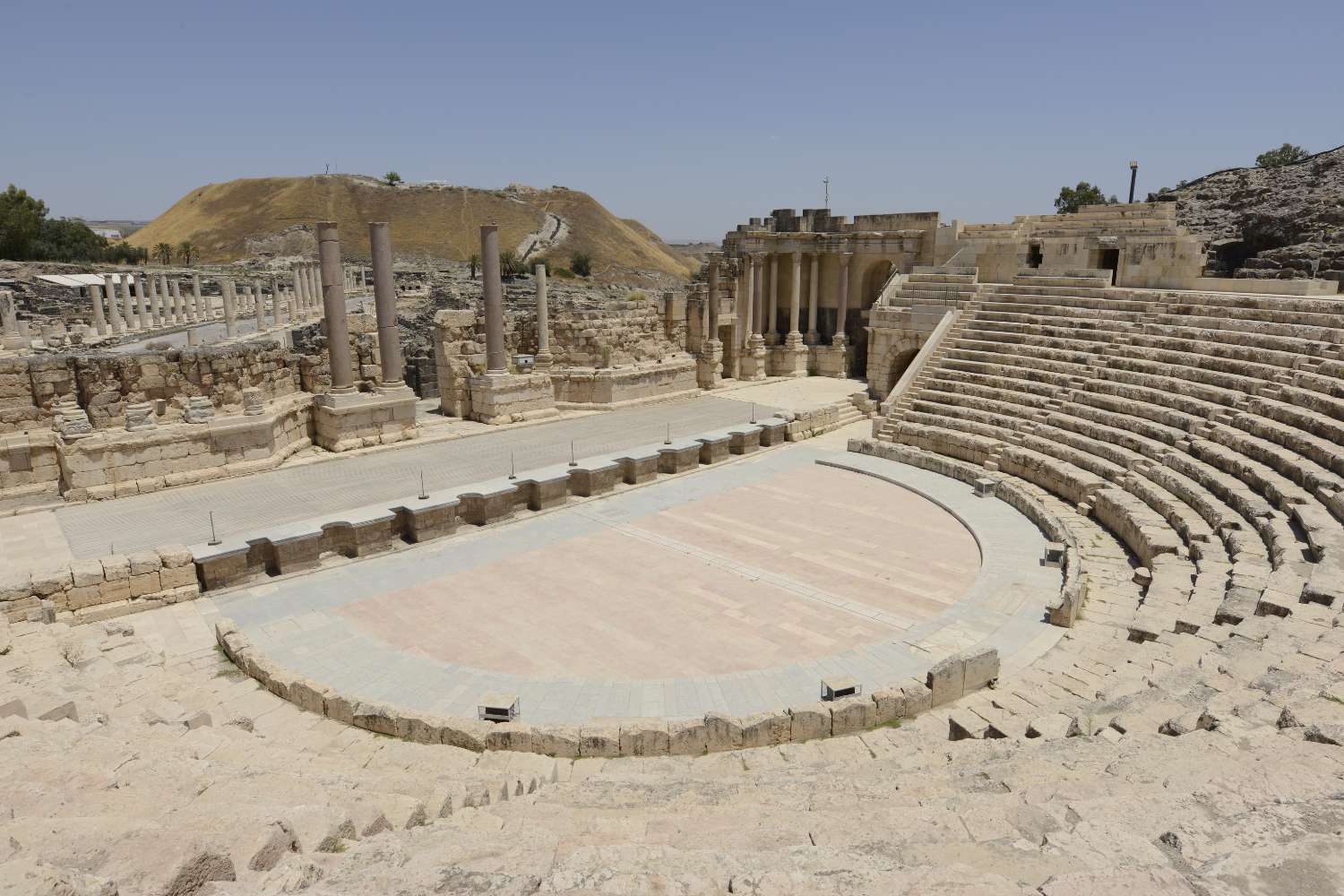
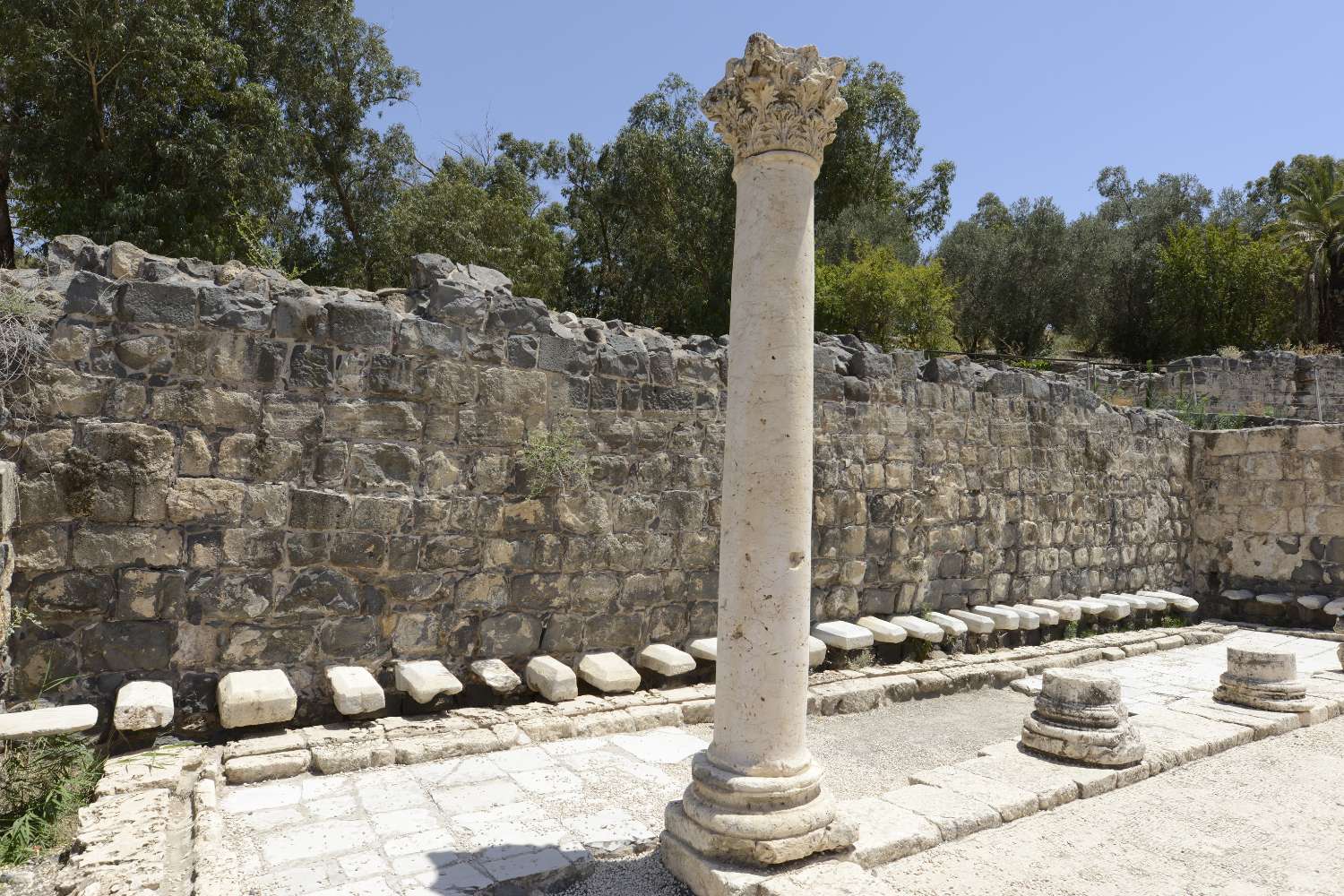
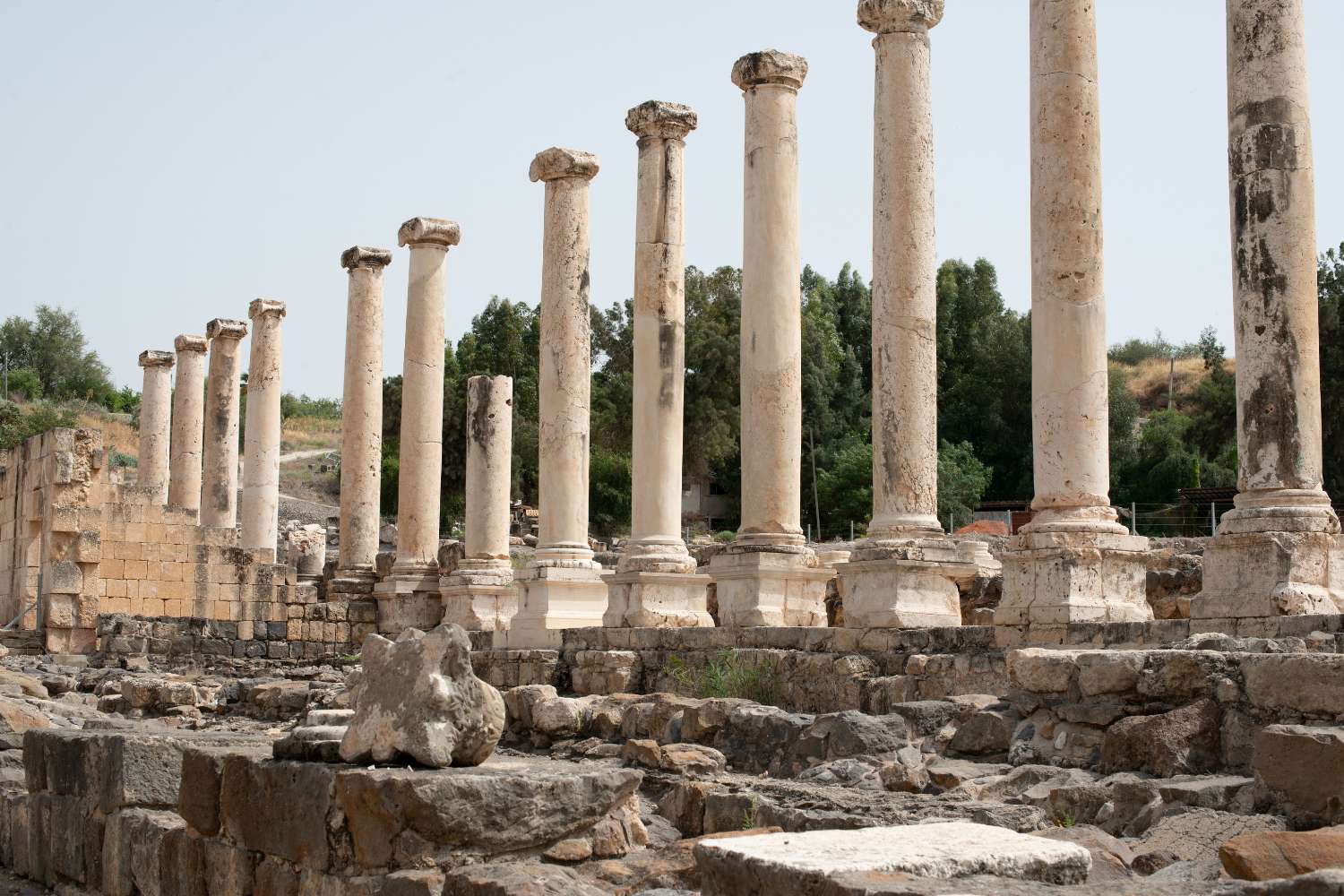
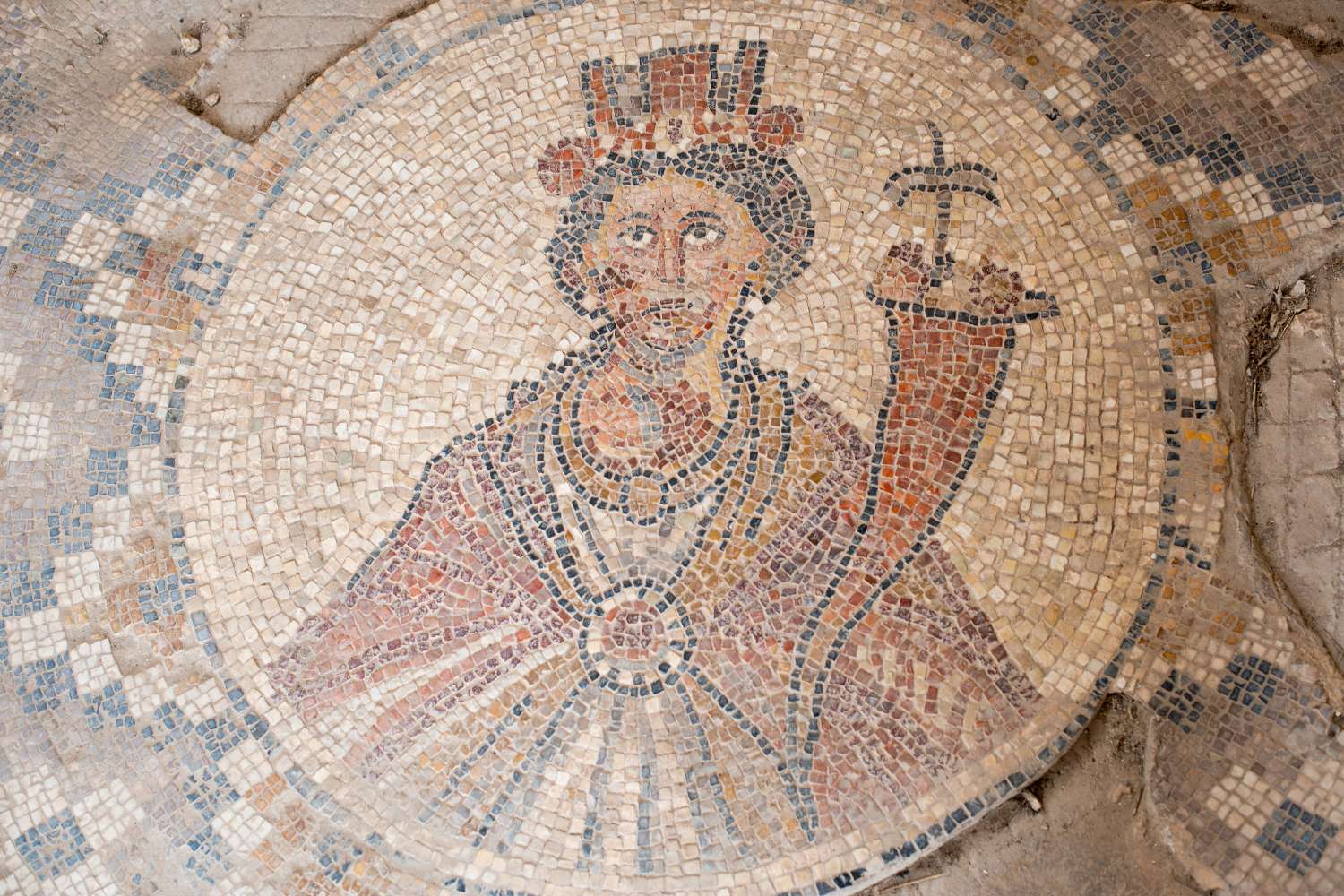
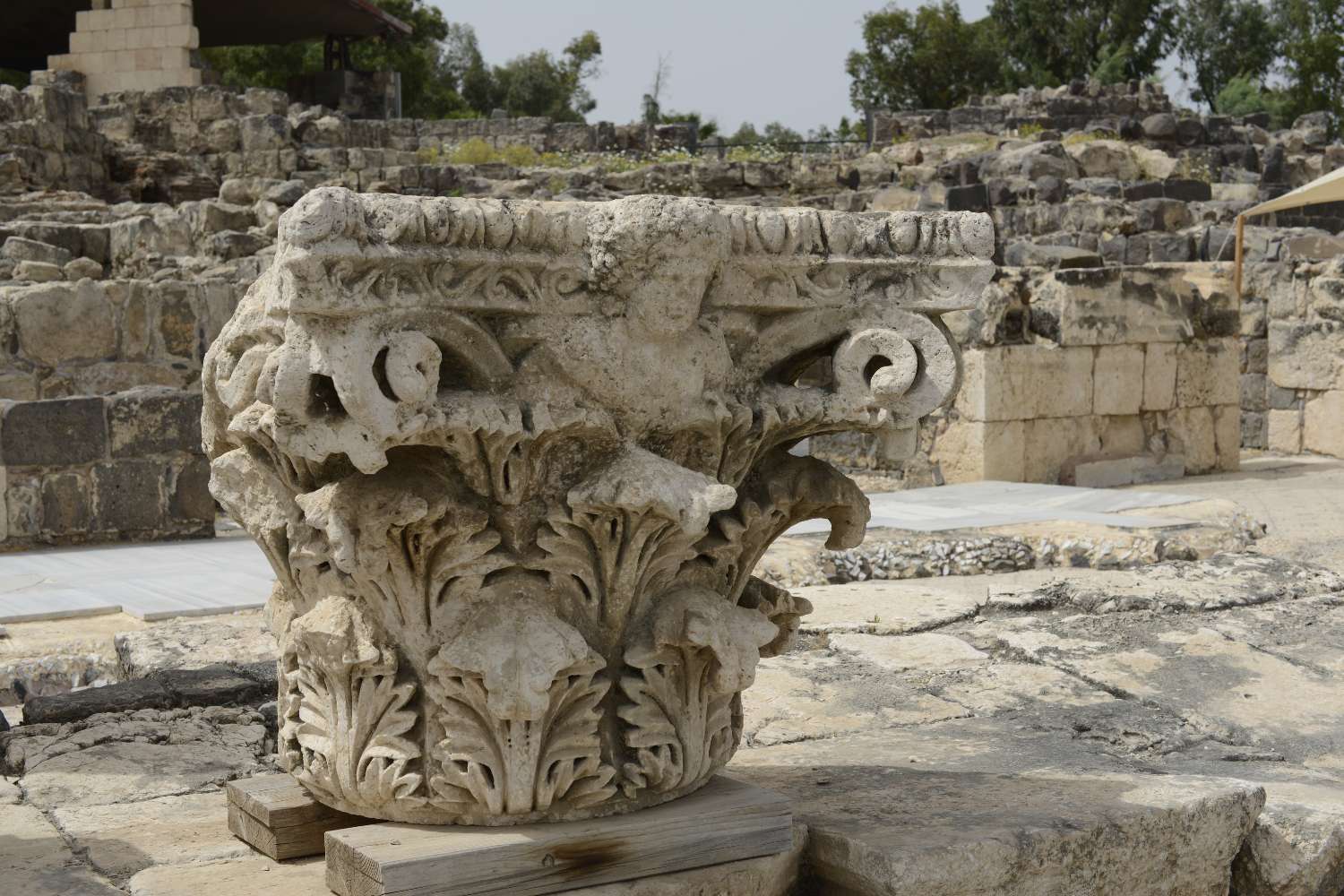
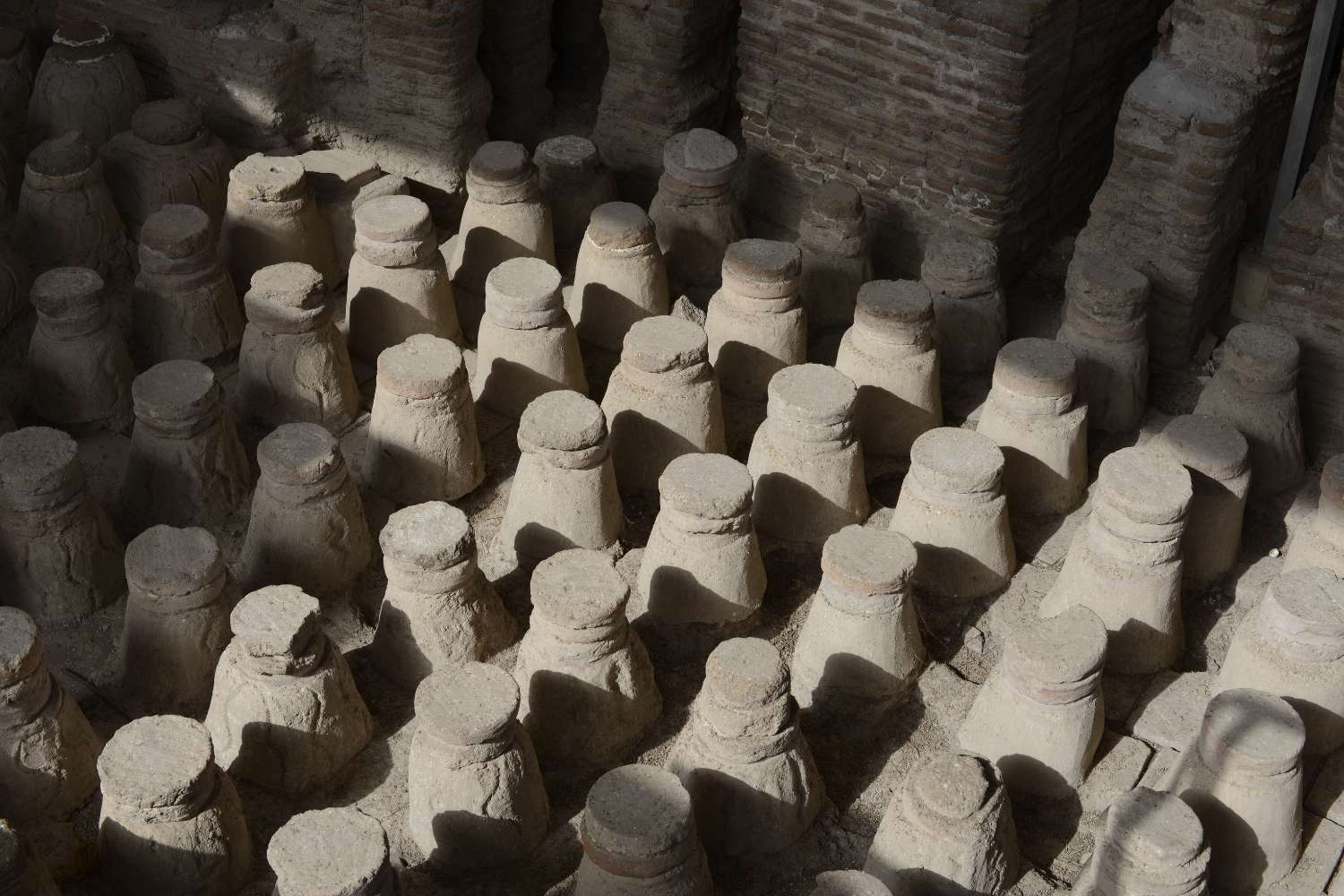
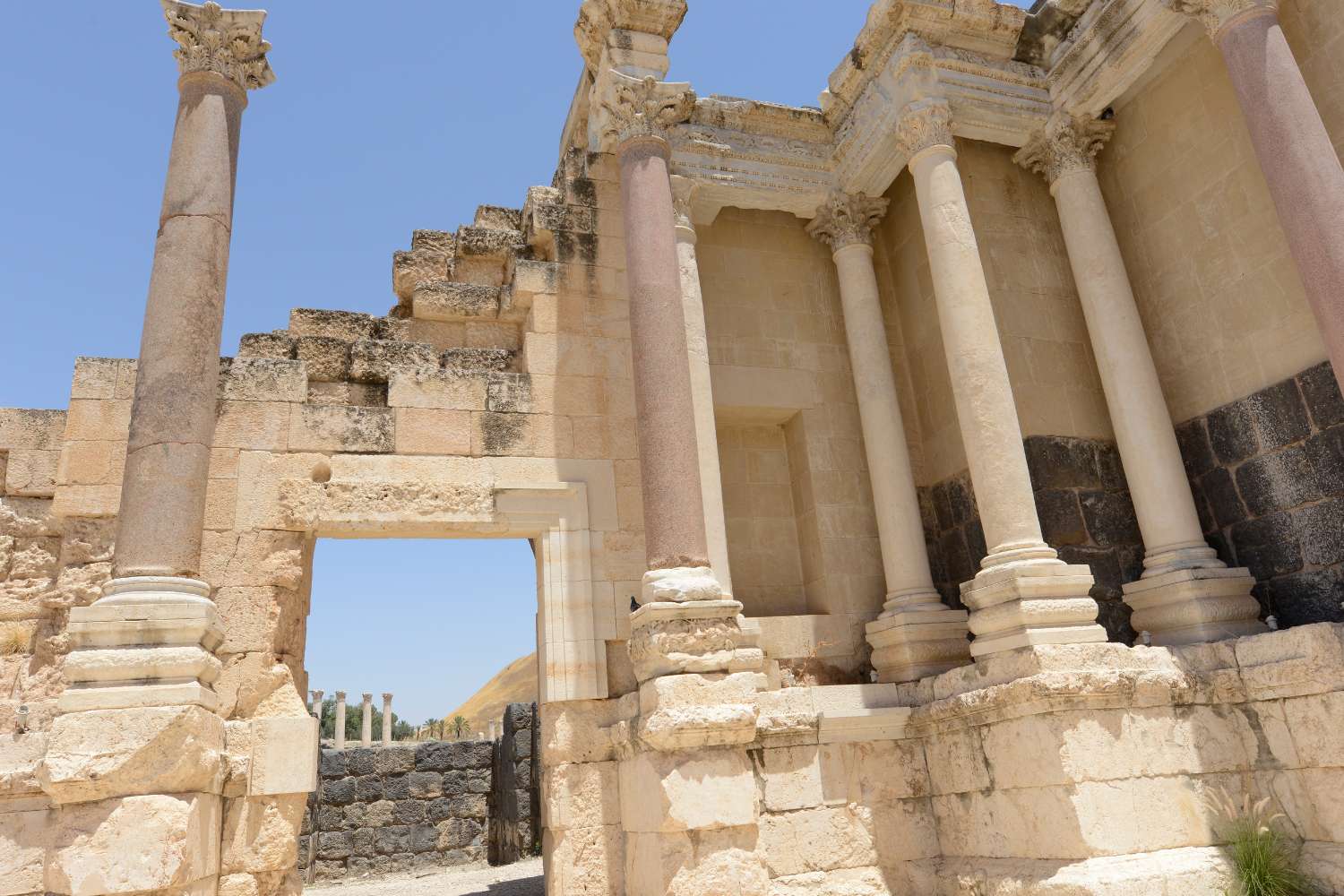
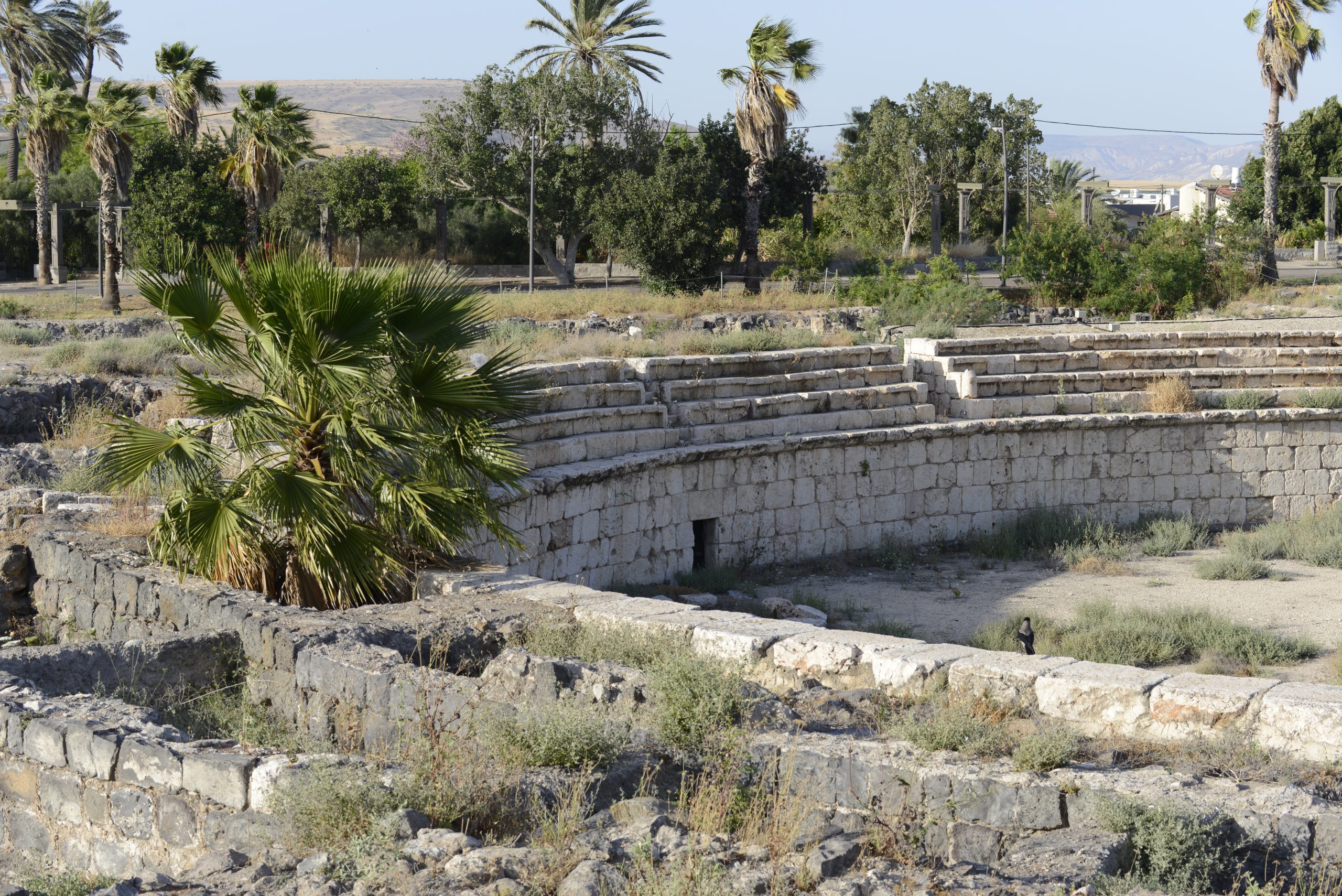
Scythopolis: Beit She’an in Roman Times
In the early Roman period, the city was called Nysa-Scythopolis—named after Nysa, the mythical nurse of Dionysus, god of wine and fertility, and the city’s legendary patron. Beit She’an became the capital of the Decapolis, a league of ten cities, even though most of them were east of the Jordan.
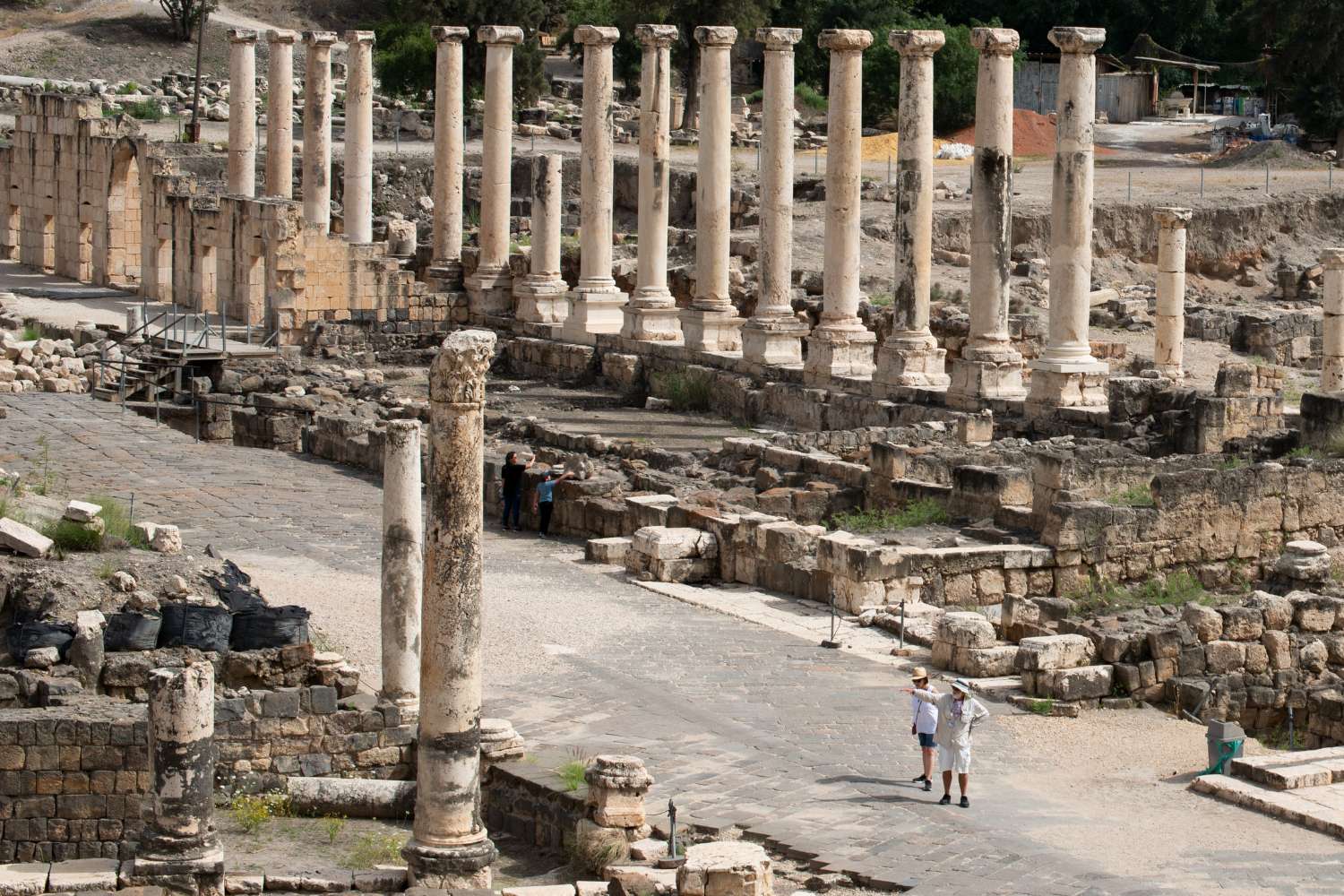
During the Byzantine era, Scythopolis was a major Christian city and, in 409 CE, was chosen as the capital of the province of Palaestina Secunda. At its peak, it was a showstopper: grand public buildings, bathhouses, markets, fountains, monumental gates, and wide Roman streets—the Cardo and Decumanus—cutting through the city. Pagan temples later transformed into churches.
Everything changed after the devastating earthquake of 749, which left the city largely in ruins and reduced it to a small town.
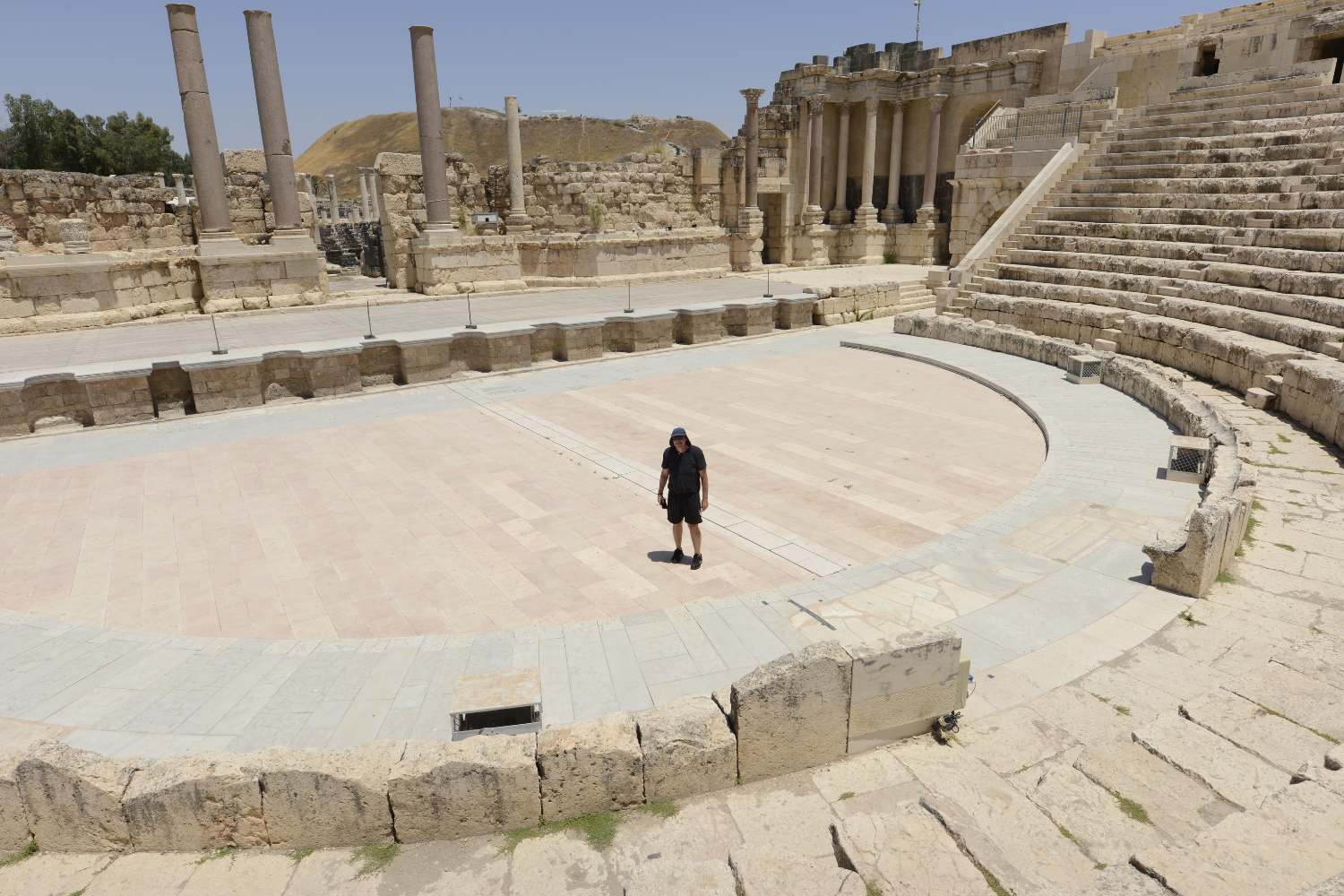
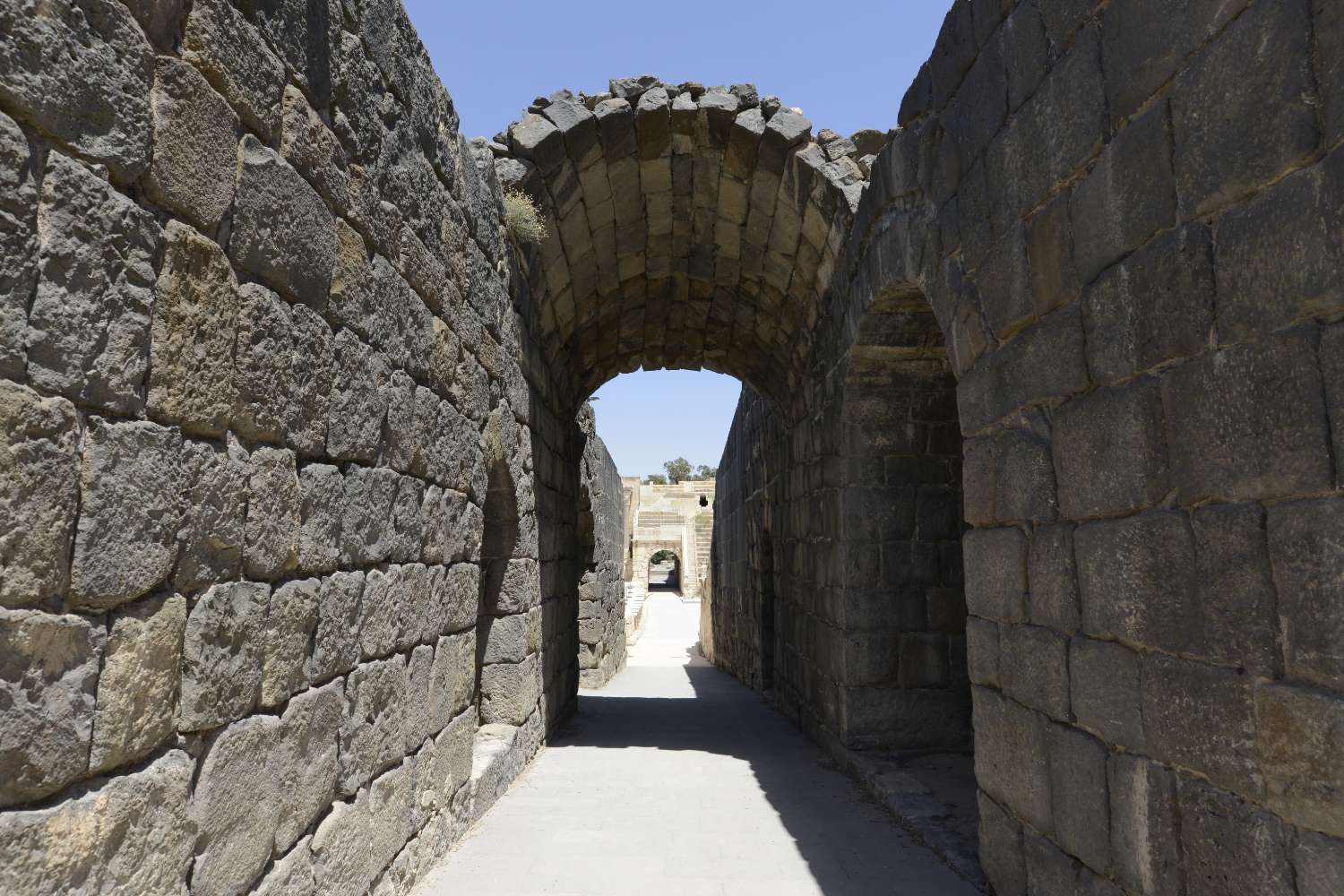
Beit She’an National park
Today, Beit She’an National Park is one of Israel’s most impressive archaeological sites. You can walk through Tel Beit She’an, explore the ruins of ancient Scythopolis, and stand inside a beautifully preserved Roman theater that still steals the show.
Beit She’an National Park invites you to watch history come alive in the immersive night show “Laylot She’an.” It’s an unforgettable experience for the whole family.
Gan Hashlosha magic, welcome to Hasachne
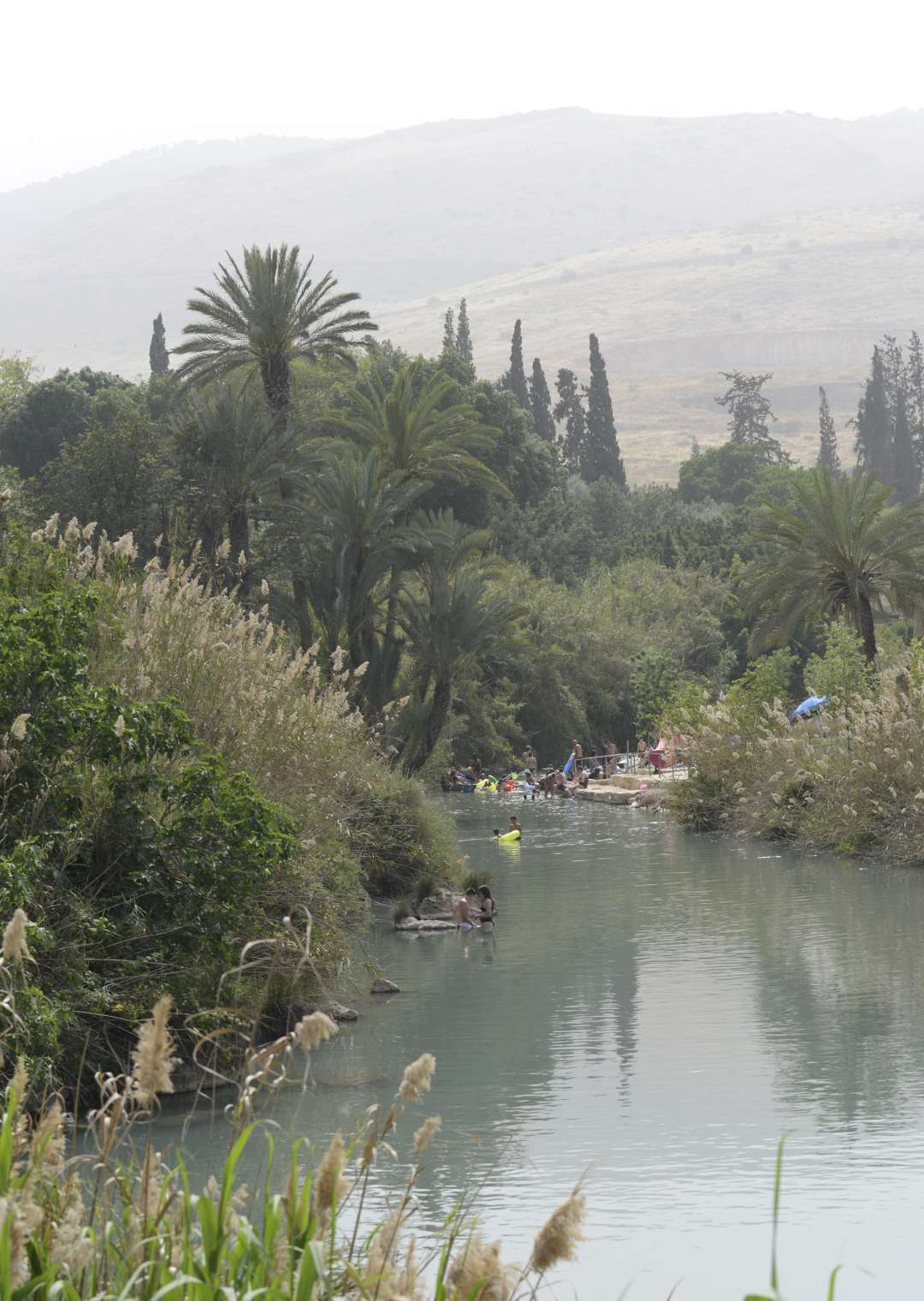
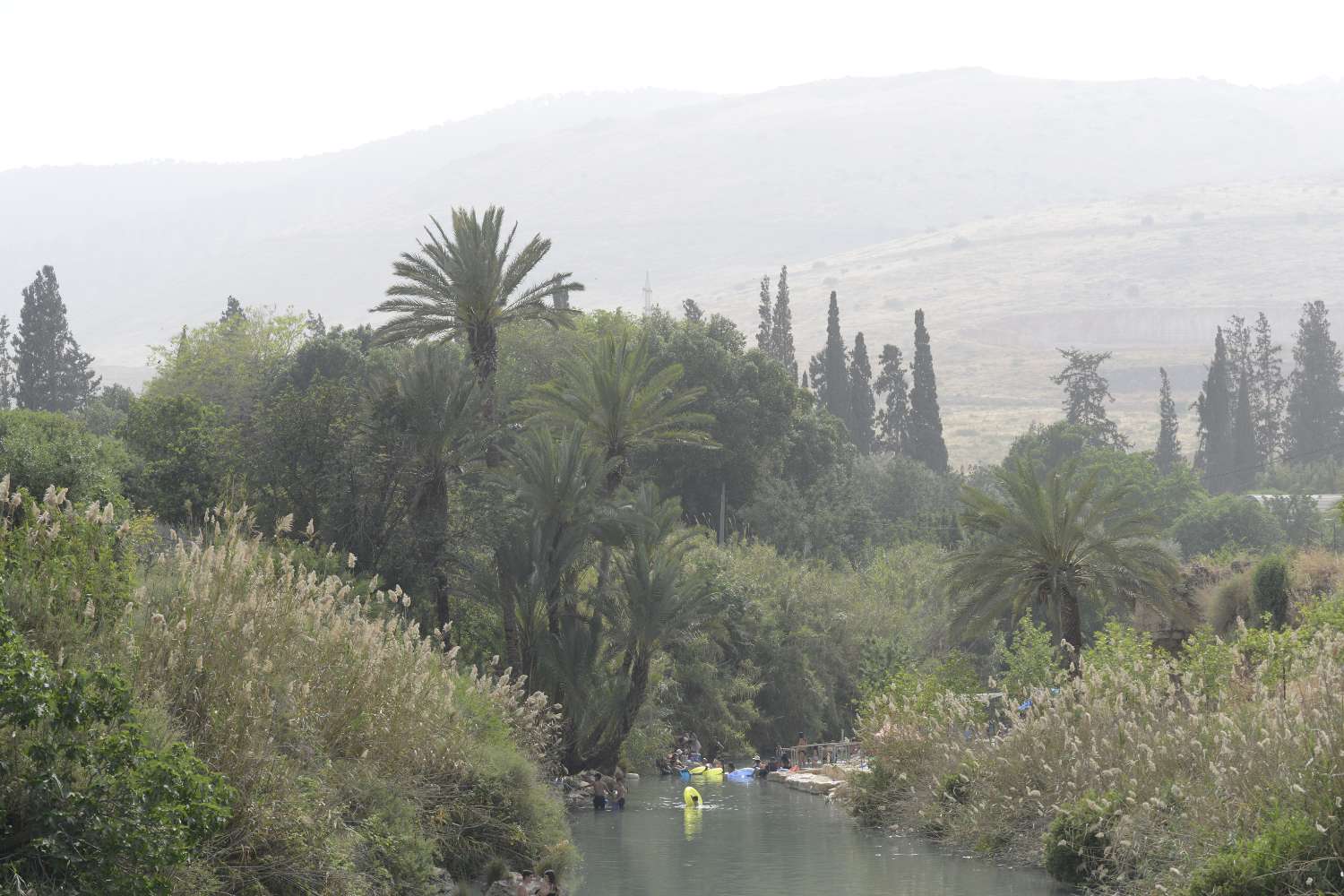
Located only 6 km. from the city of Beit She’an on the western edge of the Valley of Springs, Gan HaShlosha—also known as the Sachne—is one of Israel’s most iconic water parks, and it totally earns the hype.
Its Hebrew name, “The Garden of the Three” (Gan Hshlosha), commemorates three kibbutz members who were killed while scouting the area for a new settlement, adding a quiet layer of meaning to this beautiful spot. It’s Arabic name, likely from Sakhna—meaning “warm”—a nod to the natural springs cozy temperature.
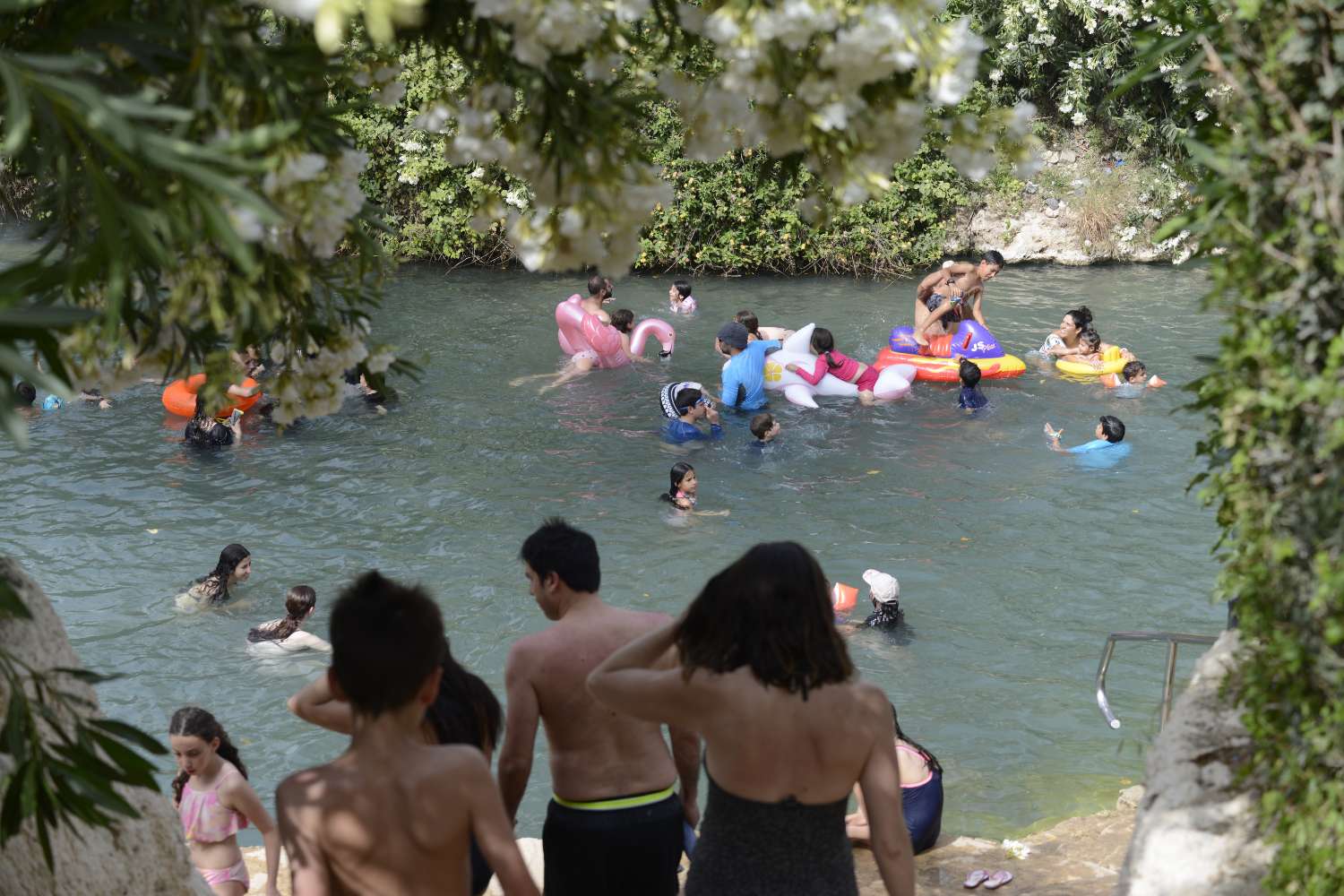
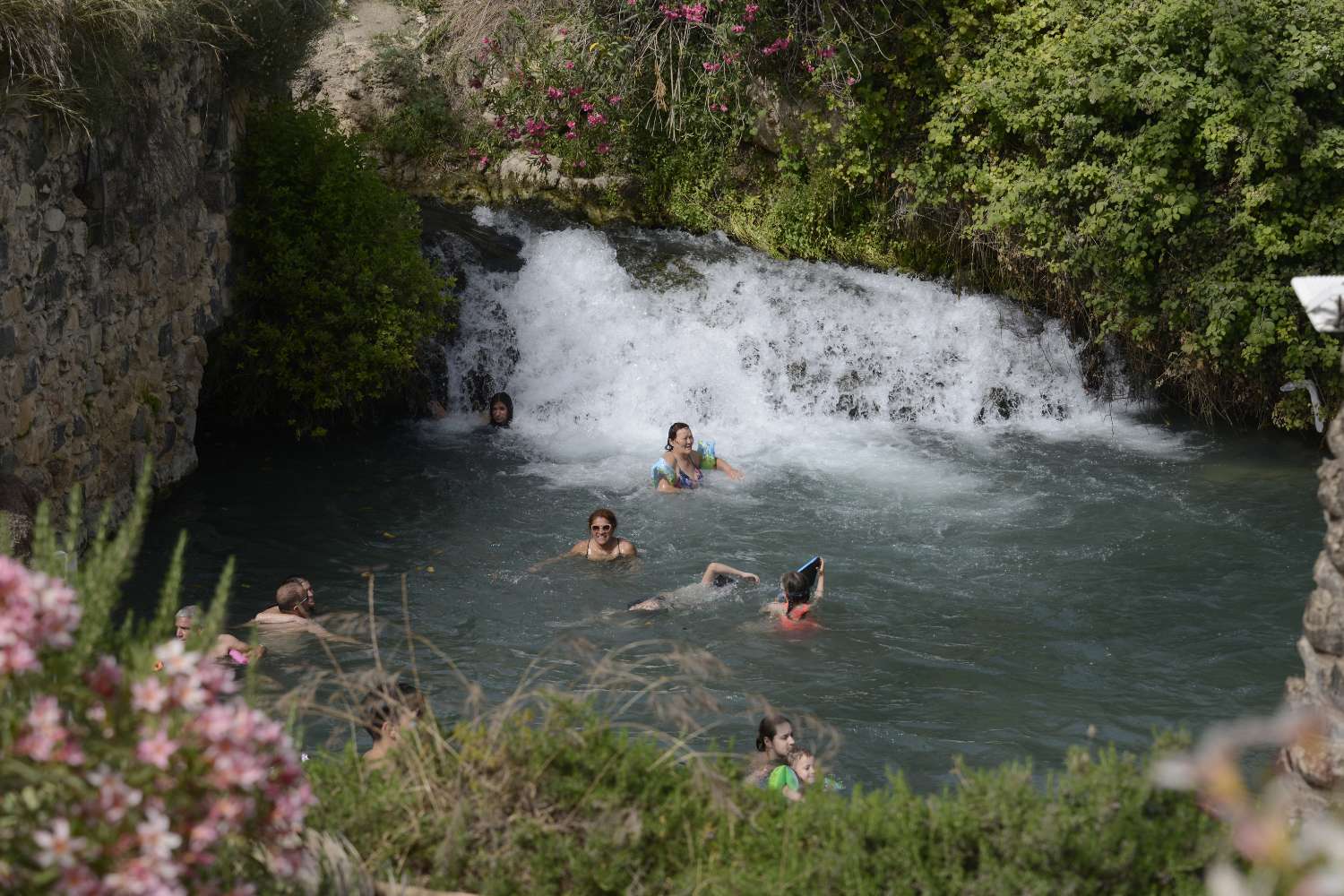
That’s exactly what makes Gan HaShlosha stand out — its natural springs. The water flows crystal-clear all year long at a steady 28°C, making every swim feel just right—summer or winter. No chlorine, no water slides, no noise. Just nature doing what it does best. The park features large, natural pools surrounded by wide green lawns, shady trees, and calm valley views. It’s the kind of place where you float on your back, watch the clouds drift by, and completely lose track of time. Perfect for families, couples, and anyone who believes water is pure therapy. Since 2024, BBQs are no longer allowed—and honestly, it only makes the vibe more relaxed.
Beyond the water, the park hides a small archaeological museum and a reconstructed Tel Amal site—the very first Tower and Stockade settlement. Founded on December 10, 1936, Nir David (then Tel Amal) became the first kibbutz in the Beit She’an Valley. A bold start, right in the middle of the wild.
Water, history, and nature come together here with laid-back vibes, warm springs, green lawns, and timeless stories—one unforgettable stop where floating, relaxing, and slowing down feels completely natural. As of February 2026, entry fees to Gan HaShlosha (Sachne) are 40 NIS per adult and 24 NIS per child. Advance booking is required.
Beit Alfa: Mosaics That Time Kept
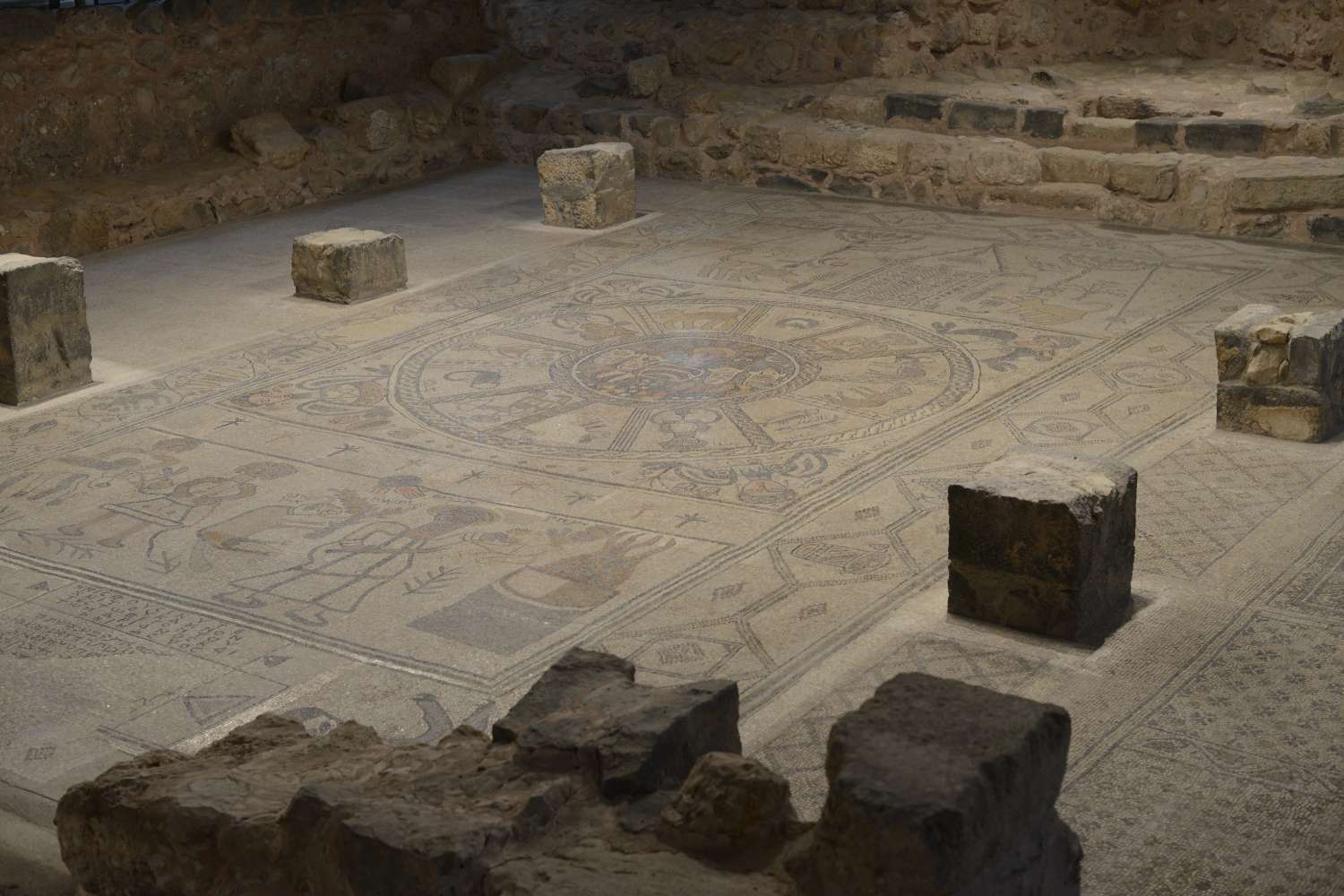
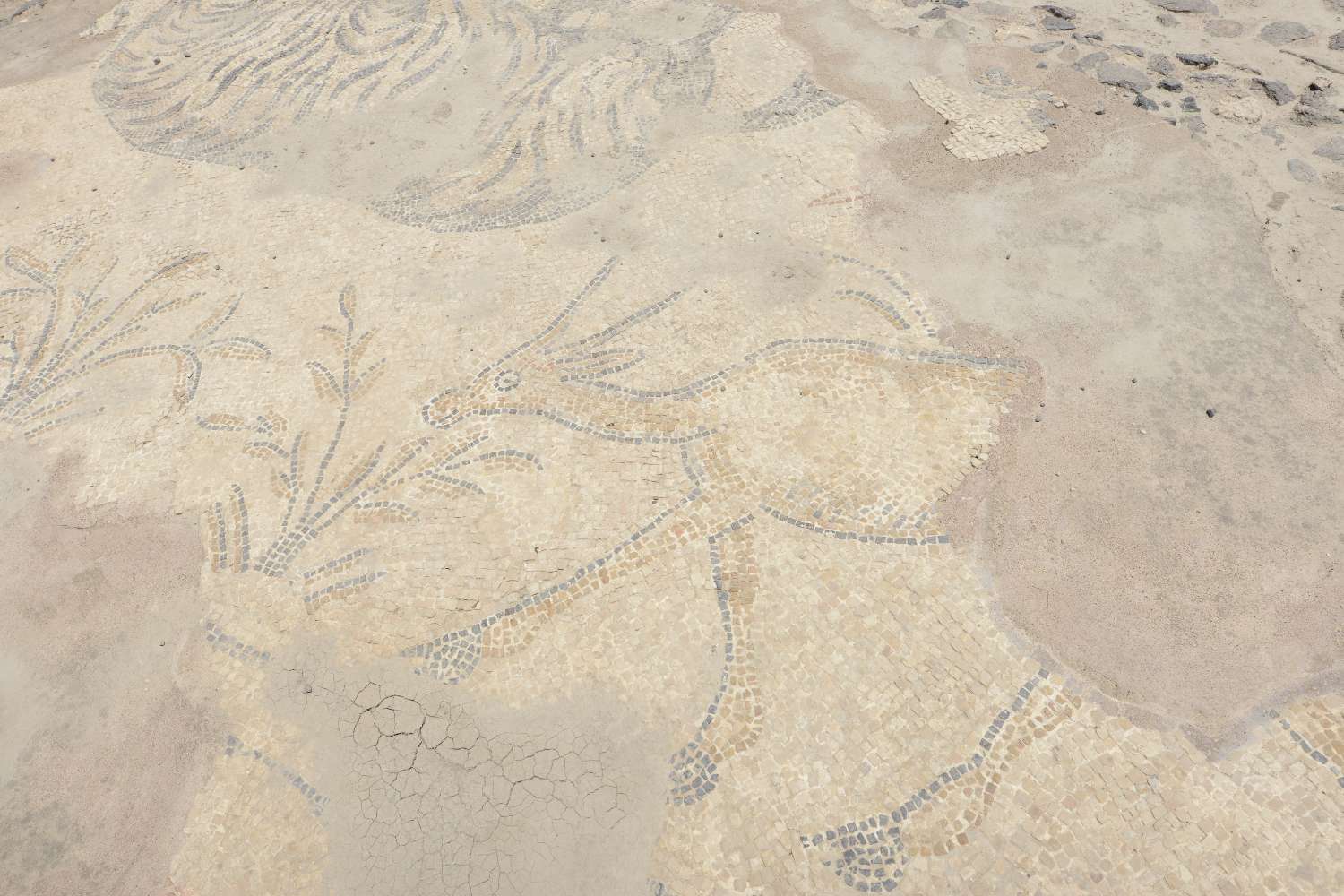
The Beit Alfa Synagogue, tucked inside Kibbutz Heftziba, just 9 km west of Beit She’an, is a serious time capsule. This Byzantine-era synagogue is best known for its bold, beautifully preserved mosaics—naive in style, Jewish in theme, with strong Roman and Hellenistic flair. It’s living proof that Jewish life didn’t skip a beat long after the Second Temple fell. Today, it’s a declared national park.
Discovered in late 1928 and excavated in early 1929, the site revealed more than expected. Beneath the famous mosaic floor, archaeologists uncovered traces of an even older synagogue, likely from the 5th century CE. The later building, dated to the 6th century, was probably destroyed in the massive earthquake of 749 CE (or maybe earlier). Ironically, the collapse helped—fallen stones sealed the mosaics, keeping them stunningly intact for centuries.
As of February 2026, entry fees are 22 NIS for adults and 10 NIS for children.
Opening hours are daily from 08:00 to 15:00. On Fridays, the site closes one hour earlier.